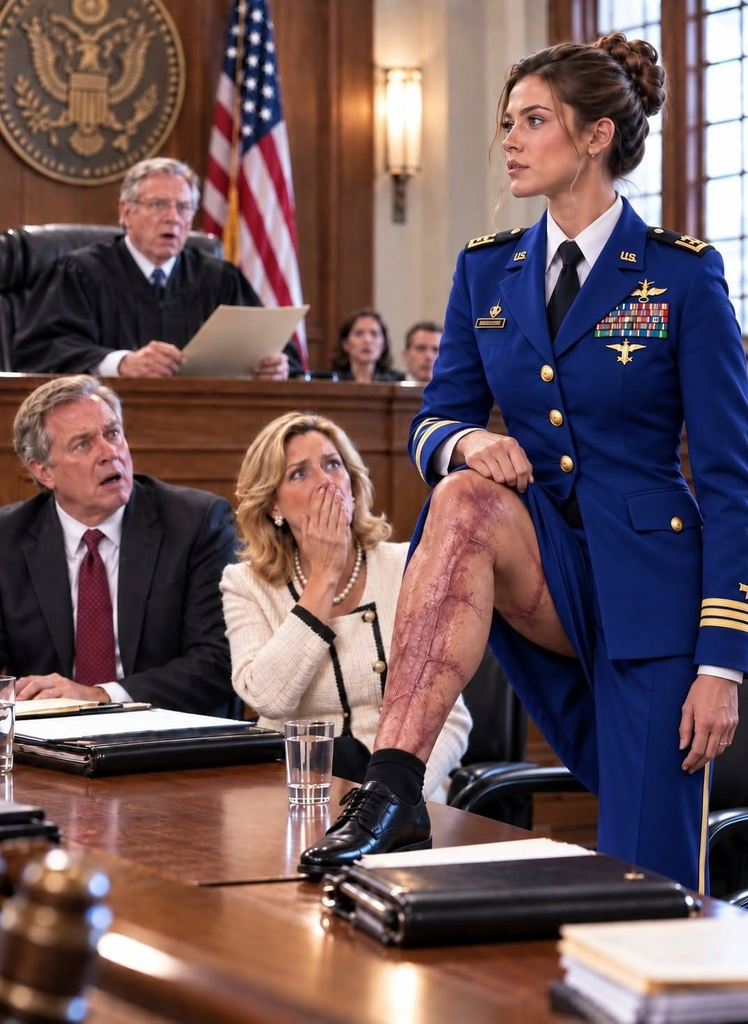
Walking into a Virginia courtroom wearing the Navy SEAL uniform my parents once treated like a family disgrace silenced the entire room. Dad chuckled under his breath and Mom shook her head, but when Judge Simmons stared at my ribbons and whispered, “My God, is that really her?” I knew my parents had walked into court without understanding who their daughter had become.
Two days earlier, I had been trimming azaleas outside my modest home near Norfolk when a cream-colored envelope arrived from Portsmouth Family Court. Inside was Case 4238B, Carter versus Carter, a property dispute naming my parents, Robert and Margaret Carter, as plaintiffs and me, Evelyn Carter, as the defendant.
My own parents were suing me.
I placed the summons on my kitchen table while my dog, Knox, rested his head against my knee. “Guess they finally found another way to speak to me,” I muttered.
It had been twelve years since I went home. After I completed BUD/S, Dad never came to see me, and Mom sent one message: “We raised a daughter, not a soldier.”
So I stopped waiting for their approval.
I served quietly, carrying responsibility for missions, logistics, and men whose lives sometimes depended on my decisions. Then an IED tore through our convoy overseas and sent me home with a rebuilt knee, a permanent limp, and a pension I rarely mentioned.
My grandfather had left me his farmhouse, and I had paid every property tax bill since 2013, even while deployed. Now my parents claimed I had abandoned it and that they had personally covered the expenses.
It wasn’t a misunderstanding.
It was a lie with a case number.
That evening, I opened the old Navy chest at the foot of my bed. The familiar scent of canvas and gun oil rose from inside as I found my uniform, medals, and the folded flag belonging to my closest friend, Lewis.
Knox watched me lift the jacket.
“They’re going to see who I became.”
Before court, I drove past Grandpa’s farmhouse. The oak tree was dying, paint peeled from the walls, and the porch sagged, but I could still picture my grandfather building that place with his own hands.
My parents hadn’t built it.
The next morning, I pinned every medal where it belonged. My jacket fit tighter and my injured knee protested when I stood straight, but the weight across my shoulders felt exactly as I remembered.
Not comfortable.
Earned.
At the courthouse, even a janitor noticed my ribbons and quietly stepped aside. “Ma’am.”
When the clerk called Case 4238B, I stood without an attorney.
Dad gave me the same hard look I remembered from childhood. Mom sat beside him wearing pearls, then glanced at my uniform with unmistakable disgust.
“Uniform,” she whispered.
Judge Simmons took his seat. “Mr. Carter, are you claiming your daughter abandoned this property?”
“Yes, sir,” Dad answered. “The house has been empty. We’ve been covering everything.”
Then Judge Simmons turned toward me.
“Commander Carter, would you like to make a statement?”
Dad’s smile disappeared.
Mom’s fingers tightened around her pearls.
I opened my mouth, but Judge Simmons suddenly reached for the cream-colored case folder.
“Before you answer, Commander,” he said, staring directly at my parents, “there’s something in this file they apparently don’t know that I know.”
The courtroom went silent.
Then he pulled out a document bearing my grandfather’s signature.
And the moment my father saw it, every trace of color vanished from his face.
For several seconds, nobody in the courtroom moved.
The man standing beside the open doors looked older than I remembered, but not so old that I failed to recognize him.
His hair had gone almost completely silver. His shoulders had narrowed.
A deep line ran from the corner of his nose to his jaw.
But his eyes were the same.
Calm.
Watchful.
Uncomfortably familiar.
“Chief Warrant Officer Daniel Reeves,” I whispered.
My father’s head snapped toward me.
That reaction told me more than any answer could have.
Daniel Reeves had served with my grandfather decades earlier.
When I was a child, he appeared at our farmhouse once or twice a year, usually carrying coffee, old photographs, or some piece of Navy equipment Grandpa insisted belonged in a museum.
Advertisement
PArt 2: Walking into a Virginia courtroom wearing the Navy SEAL uniform
PublishedSeptember 18, 2026
×
PART 2 — THE SIGNATURE THAT SHOULD NEVER HAVE EXISTED
For several seconds, nobody in the courtroom moved.
The man standing beside the open doors looked older than I remembered, but not so old that I failed to recognize him.
His hair had gone almost completely silver. His shoulders had narrowed.
A deep line ran from the corner of his nose to his jaw.
Advertisement
But his eyes were the same.
Calm.
Watchful.
Uncomfortably familiar.
“Chief Warrant Officer Daniel Reeves,” I whispered.
My father’s head snapped toward me.
That reaction told me more than any answer could have.
Daniel Reeves had served with my grandfather decades earlier.
When I was a child, he appeared at our farmhouse once or twice a year, usually carrying coffee, old photographs, or some piece of Navy equipment Grandpa insisted belonged in a museum.
Advertisement
Then, when I was sixteen, Daniel stopped coming.
Grandpa never explained why.
Now he walked into Portsmouth Family Court carrying the Navy chest I had spent years believing had disappeared after my grandfather’s funeral.
Judge Simmons gestured toward the witness stand.
“Mr. Reeves, please come forward.”
Daniel nodded, but before moving, he looked directly at me.
“Evelyn.”
One word.
Nothing dramatic.
Advertisement
Still, something inside me tightened.
“Sir.”
He gave the smallest smile.
“You still stand exactly like your grandfather.”
My mother suddenly dropped back into her chair.
“Robert,” she whispered.
Dad didn’t look at her.
Daniel passed him without acknowledgment.
The wooden chest in his hands was dark blue, scratched around the brass corners, with a faded anchor painted across the lid.
Advertisement
I remembered sitting beside it on Grandpa’s porch as a child while he polished his shoes.
I remembered touching the anchor and asking what was inside.
“Things people forget when they decide the past is inconvenient,” Grandpa had told me.
At nine years old, I had laughed.
At thirty-eight, standing inside a courtroom where my parents were accusing me of stealing the home he had left me, I finally understood the warning.
Advertisement
Daniel set the chest beside the witness stand.
Judge Simmons asked him to raise his right hand.
After the oath, Daniel sat.
“Mr. Reeves,” the judge began, “when did you first learn that there might be a dispute involving Commander Carter’s property?”
“Six months ago.”
Dad’s attorney stood. “Your Honor, I object. We’ve had no notice that this gentleman would testify.”
Judge Simmons looked over his glasses.
Advertisement
“You had notice that title authenticity was under review.”
“Not that a surprise witness would appear.”
“This isn’t a television drama, counselor. Sit down.”
A few people in the gallery shifted.
Dad stared straight ahead.
Daniel continued.
“Six months ago, I received a letter from Robert Carter.”
My father finally looked up.
Daniel reached into his jacket.
“He wanted me to sign an affidavit stating that Evelyn’s grandfather, Arthur Carter, had changed his mind about leaving the farmhouse to Evelyn.”
Advertisement
The attorney beside Dad closed his eyes briefly.
Judge Simmons leaned forward.
“Did Arthur Carter ever tell you that?”
“No, sir.”
“What did he tell you?”
Daniel looked at me.
“That the house was meant for Evelyn.”
My throat tightened.
Dad laughed bitterly.
“He was an old man.”
Daniel turned toward him.
“He was seventy-two, Robert. Not incompetent.”
Advertisement
“You weren’t there every day.”
“No,” Daniel said quietly. “But I was there the day he signed the trust.”
The silence grew heavier.
Mom lowered her face.
Judge Simmons glanced toward the original trust document.
“You witnessed it?”
“I did.”
“Why isn’t your name listed?”
“It is. On the final notarized attachment.”
Judge Simmons looked toward the clerk.
Advertisement
She began flipping through the file.
My father’s attorney leaned toward him again, speaking rapidly under his breath.
Daniel continued before anyone asked.
“Arthur knew there would be a fight.”
That sentence landed harder than anything else.
I stared at him.
“What do you mean?”
Judge Simmons looked at me but did not reprimand me for speaking.
Daniel’s expression softened.
Advertisement
“Your grandfather knew your father resented the decision.”
Dad slammed one palm against the table.
“That’s enough.”
Judge Simmons’ voice hardened.
“Mr. Carter.”
Dad sat back.
His face was red.
Daniel’s eyes never left mine.
“Arthur told me Robert wanted the property because a developer had begun buying land nearby.”
I blinked.
“What developer?”
Dad looked away.
Advertisement
Daniel answered.
“Langford Development.”
The name hit me strangely.
I knew it.
Not personally.
From signs.
Billboards.
Construction projects stretching across southeastern Virginia.
Luxury subdivisions.
Commercial centers.
Waterfront redevelopment.
Daniel continued.
“Back then, they were quietly acquiring old farmland.”
Judge Simmons looked toward my parents.
“Was there ever an offer on the property?”
Dad didn’t answer.
Advertisement
His attorney did.
“Not relevant to the current ownership question.”
“It becomes relevant,” Judge Simmons replied, “if financial motive explains an allegedly fraudulent lien.”
My mother whispered something.
Dad hissed at her.
I heard only two words.
“Keep quiet.”
That was when the fear disappeared.
For years, I had imagined this moment differently.
I thought that if I ever confronted my parents, I would become the rejected daughter again.
Advertisement
Seventeen years old.
Standing in our hallway with BUD/S paperwork in my hands while Dad called my choice embarrassing.
Twenty-six, returning from deployment while Mom asked me not to wear my uniform because neighbors might talk.
Thirty-one, lying in a military hospital after the convoy explosion, watching my phone remain silent.
But sitting there now, I realized something.
They had no power over me anymore.
Advertisement
Only history.
And history becomes less frightening when you finally stop running from it.
I stood.
“Your Honor, may I ask one question?”
Judge Simmons considered me.
“One.”
I turned toward Daniel.
“Did Grandpa know about the loan?”
Daniel’s jaw tightened.
“Yes.”
My pulse kicked.
“When?”
“Two weeks before he died.”
My father surged to his feet.
Advertisement
“That’s a lie!”
“Sit down,” Judge Simmons ordered.
Dad didn’t.
“Arthur was dying. He didn’t know what he was saying.”
Daniel looked at him.
“He knew enough to call me.”
My mother started crying.
Not loudly.
Just enough that the sound scraped across the courtroom.
Dad turned toward her.
“Margaret.”
She shook her head.
“I told you we shouldn’t have done this.”
Advertisement
The entire room froze.
Dad stared at her.
His attorney whispered, “Mrs. Carter, stop speaking.”
But Mom kept going.
“I told you she would find out.”
My stomach turned cold.
Find out what?
Judge Simmons called a ten-minute recess.
The gavel struck.
Everyone began speaking at once.
Dad’s attorney grabbed his arm.
Mom covered her mouth.
Daniel remained seated.
I didn’t move.
Judge Simmons disappeared through the side door.
The clerk began organizing documents.
Then Dad looked at me.
For the first time that morning, there was no contempt in his face.
Only panic.
“Evelyn.”
I stared at him.
He came closer.
“Whatever Reeves says, you need to understand your grandfather made choices that affected all of us.”
“So did you.”
“You don’t know what happened.”
“Then tell me.”
His jaw tightened.
“This courtroom isn’t the place.”
“You chose the courtroom.”
That stopped him.
Mom stood several feet behind him.
Mascara had begun gathering beneath one eye.
“Evelyn, please.”
I looked at her.
She hadn’t said my name that gently since I was young.
That almost hurt more.
“What did you do?”
She glanced toward Dad.
His expression shut her down immediately.
Daniel walked toward us.
Dad stepped between him and me.
“This doesn’t concern you.”
Daniel stopped.
“It concerned me when Arthur asked me to protect his granddaughter.”
“I’m her father.”
Daniel’s face went hard.
“And you spent twelve years making sure she knew your pride mattered more than she did.”
Dad raised his chin.
“You think wearing that uniform made her happy?”
Daniel looked at me.
“No.”
Then back at Dad.
“But I think becoming herself did.”
I turned away before either man could see how deeply that sentence cut.
The clerk announced that court would resume in five minutes.
I walked into the hallway.
My knee was beginning to ache.
Stress always made the old injury worse.
I leaned against the stone wall beneath a framed photograph of the courthouse from 1954.
Daniel followed.
For a moment, neither of us spoke.
Finally, I asked, “Why did you have the chest?”
He looked toward the courtroom doors.
“Your grandfather gave it to me.”
“When?”
“Three months before he died.”
“Why?”
“He said somebody would come looking for it.”
My hands went cold.
“My father?”
Daniel nodded.
“Did he?”
“The night after the funeral.”
I stared at him.
“Dad came to you?”
“He asked whether Arthur had left me documents.”
“What did you say?”
“That Arthur left me memories.”
“And he believed you?”
“No.”
Daniel smiled faintly.
“Your father has never believed anybody who answers calmly.”
Despite everything, I almost laughed.
Then I looked at the chest.
“What’s inside?”
Daniel’s expression changed.
“Evidence.”
“Of the loan?”
“More than that.”
Before I could ask another question, my mother appeared at the end of the hallway.
“Evelyn.”
Daniel stepped aside.
Mom approached slowly.
She looked older than I remembered.
Not because twelve years had passed.
Because fear had stripped away the polished version of her.
“I need to talk to you.”
“Then talk.”
“Alone.”
Daniel glanced at me.
I nodded.
He walked back toward the courtroom.
Mom waited until he was gone.
Then she whispered, “Your father didn’t forge your signature.”
I stared at her.
For one strange second, I felt relief.
Then I realized what she had actually said.
I lowered my voice.
“You did?”
She closed her eyes.
That was answer enough.
I stepped backward.
“Mom.”
“It wasn’t supposed to hurt you.”
I almost laughed.
The sound came out hollow.
“You put my name on a loan.”
“He said we needed temporary collateral.”
“How much?”
She hesitated.
“How much?”
“Two hundred thousand.”
My breath left me.
“Against Grandpa’s house?”
“Robert said he would repay it.”
“For what?”
She looked toward the courtroom.
“I can’t tell you.”
My anger rose so quickly that my hands began shaking.
“After twelve years, you drag me into court and claim I abandoned property you used as collateral, and now you can’t tell me why?”
“It was complicated.”
“No. Complicated was coordinating evacuations under fire. Complicated was learning to walk after surgeons rebuilt my knee. This is fraud.”
She flinched.
I didn’t care.
Not then.
“Why are you suing me?”
Her eyes filled.
“Because the loan became a problem.”
“What problem?”
Before she could answer, Dad appeared.
“Margaret.”
She stopped.
He walked toward us.
“Court’s starting.”
I looked at him.
“She told me.”
His face changed.
Mom whispered, “Robert—”
“You forged my signature,” I said.
A janitor pushing a cart stopped twenty feet away.
Dad lowered his voice.
“Evelyn, don’t make a scene.”
I felt twelve years of buried anger ignite.
“You sued me.”
“We were trying to fix something.”
“By lying?”
“By preventing a larger problem.”
“What problem?”
His eyes hardened.
“You think everything in life is simple because the military taught you rules.”
“No. The military taught me what happens when someone lies about facts other people depend on.”
“That’s enough.”
“Not even close.”
The courtroom doors opened.
The clerk called us inside.
Judge Simmons returned.
We took our places.
Daniel sat near the witness stand.
The chest remained beside him.
Judge Simmons looked over the room.
“Before we continue, I want to clarify something.
Based on what has emerged, this matter may extend beyond civil property litigation.”
Dad’s attorney stood.
“My clients would like to withdraw their petition.”
My parents both turned toward him.
Apparently, that had not been discussed.
Judge Simmons raised one eyebrow.
“That may address the property claim. It does not erase documents already submitted to this court.”
The attorney swallowed.
“Understood.”
I stared at Dad.
He stared at the table.
Judge Simmons turned toward me.
“Commander Carter, do you oppose dismissal?”
I could have ended it there.
Taken the house.
Gone home.
Closed the chest.
Returned to my quiet life.
For twelve years, that was exactly what I had done whenever my family wounded me.
Walked away.
Survived.
Built something elsewhere.
But surviving and resolving are not the same thing.
“I oppose dismissal without explanation of the lien.”
My mother began crying again.
Judge Simmons nodded.
“Reasonable.”
He turned to Daniel.
“Mr. Reeves, you mentioned the contents of the chest.”
Daniel stood.
“Yes, sir.”
“Open it.”
My father whispered, “No.”
Judge Simmons heard him.
“So noted.”
Daniel knelt.
The old brass latch resisted.
Then clicked.
The sound was small.
But it felt enormous.
Inside were folders, photographs, a leather notebook, several sealed envelopes, and an old cassette recorder.
Daniel removed the first folder.
“This contains the original property transfer.”
The second.
“Tax receipts Arthur maintained before Evelyn took ownership.”
The third.
“Correspondence from Langford Development.”
Judge Simmons looked interested.
Daniel removed a thick envelope.
“And this was addressed to Evelyn.”
I stared.
My name was written across the front in Grandpa’s handwriting.
My knees almost failed me.
“When was that written?”
“Before his death.”
“Why didn’t I get it?”
Daniel’s eyes filled with regret.
“Because Arthur told me to wait until someone tried to take the house.”
My father looked furious.
“You had no right.”
Daniel ignored him.
Judge Simmons asked for the envelope.
Daniel handed it over.
The judge examined the seal.
“Commander Carter, this is addressed to you. Do you want it entered as evidence before opening?”
I stared at Grandpa’s handwriting.
Part of me wanted to grab it.
Rip it open.
Read every word.
Another part of me was suddenly terrified.
Because dead people cannot explain themselves.
Whatever was inside would be final.
“Yes,” I said.
The clerk marked it.
Judge Simmons handed it to me.
My fingers trembled against the paper.
I broke the seal.
Inside were four handwritten pages.
The first line stopped me.
Evelyn,
If you are reading this, then your father has done exactly what I feared he would do.
I closed my eyes.
The courtroom disappeared.
For one second, I was back on Grandpa’s porch.
Summer rain against the roof.
His old radio playing quietly.
His hand covering mine while he taught me how to sharpen a garden blade.
I forced myself to keep reading.
Robert believes the farmhouse should belong to him because he believes being my son entitles him to everything I built.
It does not.
Character matters more than blood.
I glanced toward Dad.
His face had gone pale.
The letter continued.
I am leaving Willow Farm to you because you were the only one who ever loved the place without asking what it was worth.
When you were fourteen, a developer offered me more money than I had ever seen.
You cried because you thought they would cut down the oak.
I refused because I realized you understood something your father did not.
A home is not valuable because someone can sell it.
It is valuable because someone remembers who lived there.
My vision blurred.
I kept reading.
But there is something else you deserve to know.
Your father has debts.
Not ordinary debts.
He borrowed money from someone connected to Langford Development.
If he ever tries to use the farmhouse as collateral, do not assume money is the entire reason.
Ask what he promised them.
My eyes stopped on that sentence.
Ask what he promised them.
I looked up.
Judge Simmons was watching me carefully.
“So?” Dad said.
Everyone turned.
He seemed almost angry that I had stopped reading.
“What does the dead man accuse me of now?”
I folded the page.
“He said I should ask what you promised Langford.”
The change in my father was immediate.
His anger vanished.
Daniel whispered, “There it is.”
Judge Simmons leaned forward.
“Mr. Carter?”
Dad said nothing.
His attorney looked at him.
“What promise?”
Dad ignored him.
Judge Simmons’ voice hardened.
“You filed the complaint. You alleged ownership interest. You submitted financial documents.
Now we have a potentially unauthorized lien tied to a developer mentioned in a letter written by the property’s prior owner.”
Dad rubbed his forehead.
“I need to speak with counsel.”
Judge Simmons allowed it.
Dad and his attorney whispered urgently.
Mom stared at me.
Then something strange happened.
She looked relieved.
Not happy.
Relieved.
As though the secret had become heavier than the consequences.
I turned back to Grandpa’s letter.
The next paragraph made my hands tremble harder.
There is a second deed.
I reread the sentence.
There is a second deed.
If circumstances force Evelyn to sell Willow Farm, ownership of the eastern seven acres transfers automatically to the Carter Veterans Foundation.
I blinked.
I had never heard of the organization.
Then I read the next line.
I created it with Daniel Reeves.
Its purpose is to provide temporary housing to wounded veterans and their families.
My breath caught.
Daniel looked at me.
Grandpa had never told me.
Judge Simmons asked, “Commander?”
I looked up.
“There’s another deed.”
Dad’s head snapped toward me.
Daniel reached into the chest again.
He removed a long document sleeve.
Dad stood.
“No.”
His attorney grabbed his arm.
Daniel handed the sleeve to the clerk.
“The conservation and charitable-use deed.”
Judge Simmons examined it.
My father looked devastated.
That confused me.
If the land belonged partly to a veterans foundation, that made the farmhouse less commercially valuable.
But why would that frighten him this badly?
Then Daniel removed a map.
He spread it across the evidence table.
I recognized Grandpa’s property boundaries.
The farmhouse sat on the western section.
The eastern acreage stretched toward an old access road.
Daniel pointed.
“This parcel.”
Judge Simmons nodded.
“What about it?”
Daniel looked at my father.
“Langford needs it.”
“For what?”
“A highway connector.”
Dad closed his eyes.
Daniel continued.
“They’ve spent fifteen years assembling adjacent land.”
I stared at the map.
Suddenly everything made sense.
The lawsuit.
The forged lien.
The attempt to establish abandonment.
They weren’t trying to steal Grandpa’s old farmhouse because they wanted the house.
They wanted the land.
“What did they offer you?” I asked Dad.
He didn’t answer.
“How much?”
Mom whispered, “Robert.”
He snapped, “Stop.”
That confirmed it.
Judge Simmons asked again.
“Mr. Carter, did Langford Development offer you compensation tied to control of this property?”
Dad finally looked up.
“Yes.”
The word was barely audible.
“How much?”
“Three million.”
The courtroom stirred.
I felt nothing at first.
Then the betrayal settled in slowly.
Three million dollars.
Twelve years of silence.
A forged signature.
A lawsuit.
All of it suddenly had a number.
I looked at Mom.
“You did this for money?”
She shook her head desperately.
“No.”
Dad said, “Enough.”
She stood.
“No, Robert. Not anymore.”
Her voice shook, but it was louder now.
“You keep letting her believe this was greed.”
Dad stared at her.
“Margaret.”
“It wasn’t three million,” Mom said.
I frowned.
Dad’s attorney went still.
Mom looked at me.
“The money was never the real reason.”
Judge Simmons asked, “Then what was?”
My father closed his eyes.
Mom whispered, “Because Langford knew what happened in 2009.”
Daniel’s face changed.
Completely.
He stepped forward.
“What?”
Dad looked at Mom with fury.
“You idiot.”
That was when I knew we had crossed into something larger.
I remembered 2009.
Barely.
I had been entering advanced training.
Grandpa had still been alive.
Dad had been working for a logistics company near Newport News.
Then suddenly he quit.
No explanation.
Mom told everyone he wanted more time at home.
But he became quieter afterward.
Meaner.
More rigid.
“What happened in 2009?” I asked.
Nobody answered.
Then Daniel spoke.
“There was a warehouse fire.”
I looked at him.
“What warehouse?”
“Langford Maritime Storage.”
Dad’s face became gray.
Daniel stared at him.
“Robert was there.”
Mom began sobbing.
My father whispered, “You don’t know anything.”
Daniel stepped closer.
“I know three men died.”
Judge Simmons immediately raised one hand.
“This court is not going to conduct an impromptu criminal inquiry into a fifteen-year-old incident.”
He looked toward the bailiff.
“Contact the Commonwealth’s Attorney.”
Dad’s attorney stood.
“Your Honor—”
“Now.”
The atmosphere changed instantly.
This was no longer family court.
Not really.
I looked at my father.
For decades, I had thought I understood why he disliked my military career.
He believed it was unladylike.
Dangerous.
Embarrassing.
Maybe that had been part of it.
But suddenly I remembered something Grandpa once told me after Dad mocked my interest in the Navy.
Your father hates uniforms because uniforms ask questions he doesn’t like answering.
I had forgotten that sentence until now.
“Dad.”
He looked at me.
“Is that why you hated me joining?”
His eyes narrowed.
“Don’t turn this into some childhood drama.”
“Answer me.”
“This has nothing to do with you.”
“Everything you did made it about me.”
He looked tired suddenly.
Older.
Not defeated.
Just exposed.
“You think you became strong because of that uniform,” he said.
I stared at him.
“No.”
I touched the edge of Grandpa’s letter.
“I became strong because people like you kept giving me reasons to.”
His face twisted.
Mom covered her mouth.
Daniel looked away.
For once, my father had no reply.
Judge Simmons announced another recess while the court contacted the appropriate authorities.
This time, nobody rushed toward me.
I remained at the table.
Knox was waiting at home.
My azaleas still needed trimming.
There was coffee in my kitchen.
Normal things.
They felt impossibly far away.
Daniel sat beside me.
“I’m sorry,” he said.
“For what?”
“For waiting.”
“You followed Grandpa’s instructions.”
“I still waited.”
I looked at him.
“Why didn’t he just tell me?”
Daniel thought for a moment.
“Because you were already carrying too much.”
That sounded exactly like Grandpa.
I unfolded the final page of his letter.
There were only a few lines left.
If Robert comes after the house, Evelyn, do not hate him before you know everything.
He has done wrong.
But some wrong choices begin with fear.
That does not excuse them.
It only explains why people sometimes destroy the very family they believe they are protecting.
Then came one final sentence.
And Evelyn—if the chest has been opened, Daniel must give you the photograph beneath the false bottom.
I stopped breathing.
“Daniel.”
He turned.
I showed him the line.
His expression changed.
“I didn’t know about that.”
We looked at the chest.
Court was still in recess.
The clerk had stepped away.
Dad and Mom were speaking with their attorney.
Daniel knelt beside the chest.
He removed the remaining folders.
Ran his fingers across the bottom.
Then pressed the rear corner.
A thin wooden panel lifted.
Inside lay a single envelope.
Daniel stared at it.
“I swear to you, Evelyn, I’ve never seen this.”
I took the envelope.
No name.
No writing.
Just a photograph inside.
I slid it out.
At first, I saw Grandpa.
Younger.
Standing beside an oak tree at Willow Farm.
Then I saw Daniel.
And my father.
And another man.
A man I recognized immediately from television, newspapers, and highway billboards.
Charles Langford.
Founder of Langford Development.
But it was the fifth person in the photograph that made the room tilt beneath me.
A woman.
Young.
Dark-haired.
Wearing a Navy flight jacket.
Her arm was around my grandfather.
And she had my eyes.
My exact eyes.
I turned the photograph over.
Three words were written on the back in Grandpa’s handwriting.
Evelyn’s real mother.
My hands went numb.
Across the courtroom, Margaret Carter saw the photograph.
She made a sound I had never heard from another human being.
Not a cry.
Not a gasp.
Something between grief and terror.
My father turned.
He saw what I was holding.
And for the first time in my life, Robert Carter looked at me not with disappointment, anger, or contempt—
but with fear.
“Evelyn,” he whispered.
I stared at the woman in the photograph.
Then at the woman who had raised me.
“Who is she?”
Margaret covered her face.
Dad took one step toward me.
“Put that down.”
I stood.
“Who is she?”
His voice broke.
“Your mother.”
The entire courtroom seemed to vanish.
I looked at Margaret.
She was crying openly now.
Then back at the photograph.
“That’s impossible.”
Dad shook his head slowly.
“No.”
Behind him, the courtroom doors opened again.
Two investigators entered with the bailiff.
But I barely noticed.
Because Daniel had taken the photograph from my shaking hand and was staring at the woman as though he had just seen a dead person walk into the room.
Then he whispered a name.
“Rebecca Langford.”
I looked at him.
Langford.
The same name as the developer.
The same family connected to the property.
The same company connected to the 2009 fire.
Daniel raised his eyes to mine.
“Evelyn… Charles Langford wasn’t just trying to buy your grandfather’s land.”
My father whispered, “Don’t.”
Daniel ignored him.
“He was trying to get back the one piece of evidence your mother hid there before she disappeared.”
My heart stopped.
“Disappeared?”
Dad sank into his chair.
Margaret began shaking.
Daniel looked toward the eastern acreage on the map.
And then he said the words that changed everything I thought I knew about my life.
“Your mother may still be alive.”
For several seconds, I couldn’t speak.
“Your mother may still be alive.”
Daniel’s words repeated inside my head.
Alive.
My mother.
The woman I had spent thirty-eight years believing was dead.
I looked at Margaret.
She was still crying.
But she wasn’t looking at me anymore.
She was looking at the photograph.
“You knew,” I whispered.
Margaret shook her head.
“I knew she wasn’t dead.”
The words hit harder than a scream.
My father stood suddenly.
“That’s enough.”
I turned toward him.
“No.”
He stopped.
“You don’t get to say that anymore.”
My voice was shaking.
“You don’t get to decide when I know the truth.”
One of the investigators approached our table.
“Commander Carter?”
I looked at him.
“My name is Agent Miller. We need to speak with you.”
I barely heard him.
I pointed at the photograph.
“Who is Rebecca Langford?”
Neither investigator answered immediately.
Daniel did.
“She was Charles Langford’s daughter.”
I stared at him.
“And my mother?”
He nodded slowly.
“Yes.”
My stomach turned.
“How?”
Daniel looked toward my father.
“Your mother discovered what Langford was doing before the warehouse fire.”
Dad’s face went pale.
“She found financial records,” Daniel continued. “Payments. Property transfers. Names.”
“Whose names?”
Daniel looked directly at me.
“Your father’s.”
I turned toward Robert.
He didn’t deny it.
That silence told me enough.
“You worked with him?”
Dad lowered his eyes.
“Not the way you think.”
I laughed bitterly.
“Then tell me the way I should think.”
He said nothing.
Agent Miller stepped closer.
“We recovered documents connected to the 2009 investigation.”
My heart stopped.
“Recovered where?”
He glanced toward the eastern acreage marked on Grandpa’s map.
“Under an abandoned maintenance building near Willow Farm.”
Daniel’s expression changed.
“The eastern property.”
Agent Miller nodded.
“We believe someone hid evidence there shortly before Rebecca disappeared.”
I looked at the photograph again.
My mother’s face stared back at me.
Young.
Confident.
Alive.
I touched the edge of the picture.
“Why did everyone tell me she died?”
Margaret finally looked at me.
“Because we were told she was dead.”
“By who?”
She swallowed.
“Charles Langford.”
Daniel immediately stood.
“He told you that?”
Margaret nodded.
“He came to our house three days after Rebecca disappeared.”
Dad closed his eyes.
“He said if we wanted Evelyn to remain safe, we had to tell her that her mother was dead.”
The courtroom went silent.
I looked at my father.
“You knew she was alive.”
“I suspected.”
“For thirty-eight years?”
His eyes filled.
“I was afraid.”
I stepped closer.
“You were afraid?”
“Yes.”
“Of Langford?”
Dad shook his head.
“Of what Rebecca knew.”
That sentence froze me.
“What did she know?”
Dad looked toward Daniel.
Daniel answered instead.
“She knew who started the fire.”
I felt my knees weaken.
“The warehouse fire?”
“Yes.”
“Who?”
Nobody spoke.
Then Margaret whispered:
“Your father.”
I stared at Robert.
He didn’t move.
The room seemed to disappear.
“You started the fire?”
“No.”
His voice was barely audible.
“I didn’t start it.”
Margaret looked at him.
“But you were there.”
“Yes.”
“Why?”
Dad finally looked at me.
“Because Langford ordered me to destroy the records.”
My chest tightened.
“And the three men who died?”
His face collapsed.
“I didn’t know they were inside.”
Daniel’s voice became cold.
“You heard them.”
Dad looked at him.
“I heard them.”
“You left.”
“I was told to.”
Daniel stepped closer.
“You left three men inside a burning building.”
“I tried to go back.”
“But you didn’t.”
Dad looked down.
“No.”
Nobody spoke.
Then Agent Miller placed a folder on the table.
“We found something else.”
He opened it.
Inside was an old security photograph.
A woman walking away from the warehouse.
Rebecca.
Alive.
My breath caught.
“When was this taken?”
“Two days after the fire.”
I grabbed the photograph.
“Where did she go?”
Agent Miller looked at me.
“We don’t know.”
Then he placed another photograph beside it.
This one was newer.
Much newer.
My hands began shaking.
The woman in the photograph was older.
Gray streaks in her hair.
But the eyes were unmistakable.
My eyes.
My mother’s eyes.
“Where was this taken?”
Agent Miller hesitated.
“Norfolk.”
I stared at him.
“When?”
“Three months ago.”
I couldn’t breathe.
Three months.
My mother had been alive three months ago.
She could still be alive now.
I looked toward Daniel.
“Why would she stay hidden for all these years?”
He didn’t answer.
Then my father whispered:
“Because she was protecting you.”
I turned toward him.
“From what?”
He looked at the photograph.
“From the man who owns half of Virginia’s waterfront.”
Daniel corrected him quietly.
“Not anymore.”
Agent Miller closed the folder.
“We believe Rebecca left a message for someone.”
“For me?”
He nodded.
“Your grandfather.”
My heart stopped.
“What message?”
Agent Miller reached into his coat and removed a small envelope.
There was only one sentence written on it.
IF EVELYN EVER FINDS THE PHOTOGRAPH, TELL HER TO GO TO THE OAK.
I looked at Daniel.
“The oak tree?”
He nodded.
“The one in the photograph.”
The oak stood on the eastern edge of Willow Farm.
The same place where my grandfather had spent his final years.
The same place where Rebecca had once stood beside him.
I looked at the courtroom doors.
Then at my father.
“You knew she might come back.”
He didn’t answer.
I walked toward him.
For the first time, I wasn’t angry.
I was terrified.
“Dad…”
He looked at me.
“Is my mother alive?”
His lips trembled.
“Yes.”
The word barely escaped him.
Then the courtroom doors opened.
Everyone turned.
A woman stood in the doorway.
Older.
Tired.
Her hair was streaked with gray.
She wore a simple dark coat.
Her eyes immediately found mine.
Nobody moved.
Daniel dropped the photograph.
My mother looked at me.
And whispered:
“Evelyn.”
I couldn’t move.
She took one step forward.
“I am so sorry.”
My entire body went cold.
Because I knew that voice.
Not from memory.
Not from photographs.
But from somewhere deeper.
A place I had spent my entire life trying to forget.
I whispered the only word I could think of.
“Mom?”
She nodded.
Then she looked toward my father.
And her expression changed.
“You promised me you would never tell her.”
Dad stood frozen.
Rebecca’s eyes filled with tears.
“But now she knows.”
She looked at me again.
“And there’s one more thing you need to know.”
I swallowed.
“What?”
Rebecca glanced toward the eastern acreage.
Then back at me.
“Your grandfather didn’t hide the evidence there.”
She paused.
“He hid someone there.”
My blood ran cold.
“Who?”
Rebecca’s face went pale.
“The fourth man from the warehouse.”
Daniel stepped forward.
“But three men died.”
Rebecca shook her head.
“No.”
She looked directly at my father.
“Three men were reported dead.”
Then she whispered:
“The fourth one survived.”
My father took a step backward.
Rebecca pointed at him.
“And he’s the man your father has been paying to keep you silent.”
I stared at Robert.
He looked terrified.
Then Agent Miller’s radio suddenly crackled.
“Sir…”
Everyone turned.
The agent listened for several seconds.
His face changed.
“What happened?” I asked.
He slowly lowered the radio.
“They found a body.”
My heart stopped.
“Where?”
He looked at me.
“Under the old oak at Willow Farm.”
Then he added:
“But it’s not the fourth man.”
He paused.
“It’s Charles Langford.”
“It wasn’t three million,” Mom said.
I stared at her.
“Then how much?”
She looked at Dad.
“Robert never wanted the money.”
Dad’s face hardened.
“Stop.”
“No.”
For the first time in my life, my mother stood between my father and the truth.
“He was trying to pay someone back.”
My stomach tightened.
“Who?”
Mom’s lips trembled.
“Langford.”
The courtroom became completely silent.
Dad lowered his head.
I looked at Daniel.
He already knew.
“Why did my father owe Langford money?”
Daniel slowly opened the leather notebook from Grandpa’s chest.
“Because your father borrowed from them years ago.”
“How much?”
Daniel looked at the final page.
“Four hundred thousand.”
I turned toward Dad.
“And the three million?”
He finally looked at me.
“They promised me three million if I could deliver the property.”
I felt something inside me break.
“So you tried to take my grandfather’s home.”
Dad shook his head.
“I tried to save our family.”
“You forged my name.”
“I made a mistake.”
“You sued your own daughter.”
“I was desperate.”
“You lied to everyone.”
He said nothing.
Then Mom stepped forward.
“There is something else.”
I looked at her.
She reached into her purse and removed a small photograph.
She handed it to me.
It showed my grandfather standing beneath the old oak.
Beside him was a young woman.
My mother.
And beside her…
was another man.
I recognized him immediately.
Charles Langford.
But there was something written on the back.
December 14, 2009.
I looked at Mom.
“What happened that day?”
She closed her eyes.
“Your grandfather found out what Robert had done.”
My father whispered:
“Margaret, please.”
She continued.
“He threatened to expose everything.”
“Everything?”
“The loan. The forged documents. The agreement with Langford.”
I looked at Daniel.
“And my mother?”
Daniel answered quietly.
“She helped your grandfather.”
I stared at him.
“She knew?”
“She knew enough.”
Mom nodded.
“Your grandfather told me to take you and leave.”
“Why didn’t you?”
“Because Robert found us.”
My father looked down.
“I didn’t hurt you,” he whispered.
“No,” Mom said. “But you threatened us.”
Dad’s eyes filled with tears.
“I was scared.”
“So was I.”
Mom looked at me.
“That night, your grandfather gave me the original deed.”
I couldn’t breathe.
“You had it?”
She nodded.
“I hid it.”
“Where?”
She looked at Daniel.
He reached into the chest.
There was one final envelope.
Small.
Sealed.
My name was written across it.
Daniel handed it to me.
I opened it.
Inside was a single key.
And a note.
THE HOUSE IS YOURS.
BUT THE EASTERN LAND BELONGS TO THOSE WHO NEED IT MOST.
KEEP YOUR PROMISE.
I looked at Daniel.
“The foundation.”
He nodded.
“Your grandfather created it because he knew what kind of life you would build.”
My eyes filled.
I turned toward the judge.
“Your Honor, I want the record to show that I do not intend to sell the property.”
Judge Simmons nodded.
“And the eastern acreage?”
I looked at the map.
“The veterans foundation keeps it.”
Daniel smiled.
My grandfather had won without ever stepping into that courtroom.
Not through money.
Not through power.
Through a promise.
Judge Simmons reviewed the documents.
“The lien appears unsupported by valid authorization.”
Dad’s attorney slowly stood.
“My clients will withdraw the claim.”
Judge Simmons looked at him.
“And the forged signature?”
The attorney hesitated.
“That matter may require further review.”
Dad closed his eyes.
Mom reached for his hand.
He didn’t take it.
For a moment, I felt anger.
Then sadness.
Not because I had lost my parents.
But because I finally understood that I had lost them long before that morning.
I walked toward my father.
He looked at me.
“I never wanted you to hate me.”
“I don’t hate you.”
He looked surprised.
“I just don’t trust you.”
His eyes filled with tears.
“I understand.”
Mom stood behind him.
I looked at her.
“I don’t know if I can forgive you yet.”
She nodded.
“I don’t expect you to.”
That was the first honest thing anyone in my family had said all day.
Outside the courthouse, Daniel waited beside the old Navy chest.
I walked toward him.
“What happens now?”
He smiled.
“Now?”
He handed me the key.
“Now you go home.”
I looked at the key.
“Willow Farm?”
“Yes.”
We drove there before sunset.
The house looked exactly as I remembered it.
The porch.
The old swing.
The cracked flowerpot beside the steps.
And the oak tree.
I walked beneath it.
For the first time in years, I didn’t feel like I was visiting my grandfather.
I felt like I was coming home.
Daniel stood several feet behind me.
I looked up at the branches.
“Grandpa knew.”
Daniel nodded.
“He knew everything would eventually come out.”
I smiled through my tears.
“He always said the truth takes its time.”
Daniel looked at the house.
“He was right.”
I placed my hand against the old tree.
Then I noticed something carved into the bark.
Two small initials.
E.C.
My initials.
I laughed softly.
I remembered.
I had carved them there when I was fourteen.
The day Grandpa told me I could have the house someday.
I had completely forgotten.
But he hadn’t.
I sat beneath the tree and opened his letter one last time.
There was one final paragraph I hadn’t read.
Evelyn,
If you are reading this after everything has happened, don’t spend your life punishing people who disappointed you.
Take what they taught you.
Leave the rest behind.
You served your country.
You survived things I prayed you would never see.
Now live.
I couldn’t hold the tears anymore.
I pressed the letter against my chest.
For years, I had believed coming home meant returning to the place I was born.
Now I understood.
Coming home meant finally becoming the person my grandfather believed I could be.
Months later, the Carter Veterans Foundation opened its first small home on the eastern acreage.
The first family moved in during winter.
A wounded Marine.
His wife.
And their little daughter.
I watched them carry boxes through the front door.
The little girl ran across the yard.
She stopped beneath the old oak.
Then she looked up.
I smiled.
That was exactly why Grandpa had left the land to us.
Not for money.
Not for developers.
Not for revenge.
For people who needed somewhere to begin again.
My father eventually pleaded guilty to the financial fraud charges connected to the forged documents.
My mother cooperated with the investigation.
We didn’t become a perfect family afterward.
There were no magical apologies.
No instant forgiveness.
Some wounds don’t disappear just because the truth finally arrives.
But I stopped carrying their choices as if they were my responsibility.
And that changed everything.
One year after the courtroom hearing, I returned to the oak tree alone.
I brought Grandpa’s letter with me.
I folded it carefully.
Then placed it inside the old Navy chest.
The same chest Daniel had carried into court.
I closed the lid.
And for the first time, I didn’t feel like I was closing a chapter.
I felt like I was opening my life.
I looked toward the house.
The lights were on.
Someone was laughing inside.
For a moment, I could almost hear Grandpa’s voice.
“A home isn’t valuable because someone can sell it.”
I smiled.
He was right.
A home is valuable because someone remembers who lived there.
And sometimes…
because someone decides to let another person live there too.
I turned toward the house.
And walked home.
THE END
