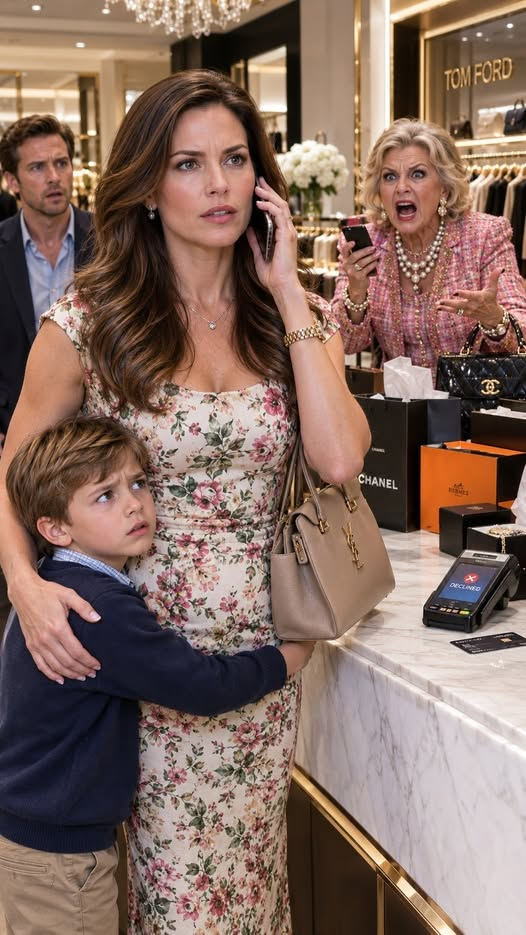
For eight years, I sent my mother $8,000 every month.
Every single month.
I never complained.
I never asked where the money went.
Whenever she called and said, “Honey, things are getting expensive,” I simply transferred it.
$8,000.
Month after month.
Year after year.
I told myself that was what family did.
My father had passed away years earlier, and my mother always made me feel as if she was struggling to survive on her own.
So I helped.
At least, that’s what I thought I was doing.
Then one Friday afternoon, my company called me into an emergency meeting.
I had to travel to another state for three days.
The problem was my seven-year-old son, Noah.
My regular babysitter had suddenly cancelled.
I looked at my phone and called my mother.
“Mom, could you watch Noah for three days? I’ll bring everything he needs. His clothes, food, medicine, homework… everything.”
There was a long silence.
Then she finally answered.
“I suppose I could.”
I smiled.
“Thank you, Mom. I really appreciate it.”
Then she said something I never expected.
“But my time isn’t free.”
I froze.
“What?”
“My time. If you want me to watch Noah, you’ll have to pay me.”
I thought she was joking.
“Mom, he’s your grandson.”
“I know.”
“It’s only three days.”
“I know.”
“How much?”
She didn’t hesitate.
“Five thousand dollars a day.”
I actually thought I had heard her wrong.
“Five thousand?”
“That’s my rate.”
I looked at the clock.
“Mom, that’s $15,000.”
“Yes.”
I took a deep breath.
I wanted to argue.
I wanted to remind her about the $8,000 I sent her every month.
But then I remembered Noah was waiting for me.
So I said:
“Fine.”
I transferred the $15,000.
That night, after Noah went to sleep, I sat alone in my bedroom.
For the first time, I opened my bank records and looked at every payment I had sent my mother.
Eight years.
96 months.
$8,000 every month.
$768,000.
I stared at the number.
Seven hundred sixty-eight thousand dollars.
I had given my mother nearly three-quarters of a million dollars.
And I had never once asked for anything in return.
Not a favor.
Not a gift.
Not even a thank-you.
Then I looked at the most recent payment.
$8,000.
I suddenly remembered something my late father once told me.
“Never confuse paying for someone with being loved by them.”
At the time, I thought he was being unfair.
That night, I finally understood what he meant.
I opened my banking app.
The recurring transfer was scheduled for Monday morning.
$8,000.
My finger hovered over the screen.
I hesitated.
Then I pressed:
CANCEL RECURRING PAYMENT.
The payment disappeared.
For the first time in eight years, I wasn’t sending my mother money.
I left for my business trip the next morning.
Noah stayed with her.
Every few hours, my mother sent me pictures.
Noah eating breakfast.
Noah doing homework.
Noah watching television.
Everything looked normal.
Until Monday morning.
My phone rang.
It was my mother.
“Where is my money?”
I knew exactly what she meant.
“I cancelled the transfer.”
There was silence.
“You did what?”
“I cancelled it.”
“You can’t do that.”
“Why not?”
“Because you always send it!”
“I know.”
“You’ve been sending me $8,000 every month for eight years!”
“Yes.”
“So send it!”
I took a breath.
“Mom, I don’t think I should have to pay you $8,000 every month just to be your daughter.”
Her voice became cold.
“After everything I’ve done for you?”
I almost laughed.
“Everything you’ve done for me?”
“Yes!”
“I paid you $15,000 to watch your own grandson for three days.”
Silence.
Then she said:
“That was different.”
“How?”
“My time has value.”
I closed my eyes.
“So does mine.”
She hung up.
When I returned home that evening, Noah ran into my arms.
“Mommy!”
I hugged him tightly.
Then I looked at my mother.
She was standing in the doorway with her arms crossed.
“You’ve changed,” she said.
I nodded.
“Maybe.”
“You’re acting like money doesn’t matter.”
“No, Mom.”
I looked directly into her eyes.
“I’m acting like love shouldn’t have a price.”
She didn’t answer.
I picked up Noah’s backpack.
As I turned to leave, she suddenly said:
“You’ll regret doing this.”
I stopped.
“Maybe.”
Then I walked away.
Two days later, my brother Jason called me.
His voice was angry.
“What happened between you and Mom?”
“I stopped sending her money.”
“You know she depends on that.”
“Does she?”
“Yes!”
“How much money do you send her every month?”
He went silent.
I already knew the answer.
“Nothing,” I said.
He didn’t respond.
I continued.
“Jason, did Mom ever tell you that I’ve been sending her $8,000 every month for eight years?”
“What?”
“She never told you?”
“No.”
I felt something cold in my stomach.
“Then you need to ask her where the money went.”
Jason called me back three hours later.
His voice sounded completely different.
“Laura…”
“What?”
“I checked.”
“Checked what?”
“Mom’s finances.”
I sat down.
“And?”
“She has money.”
“How much?”
He hesitated.
“More than I expected.”
“How much, Jason?”
“She has several investment accounts.”
“How much?”
“Over $900,000.”
I couldn’t speak.
Eight years.
$768,000 from me.
And my mother had nearly a million dollars of her own.
Then Jason said:
“There is something else.”
“What?”
“She owns another house.”
I stared at the wall.
“Since when?”
“Years ago.”
I couldn’t believe it.
My mother had never needed my money.
She had simply gotten used to receiving it.
The next morning, I went to her house.
She opened the door.
I didn’t yell.
I didn’t accuse her.
I simply placed the bank statements on the table.
“You never needed me to send you $8,000 every month.”
She looked at the papers.
Then she sat down.
For several seconds, neither of us spoke.
Finally, she whispered:
“I was afraid you’d stop helping me.”
“I would have helped you if you had been honest.”
“I know.”
“No, Mom. You don’t.”
She looked up.
“You made me believe I was saving you.”
Tears filled her eyes.
“I was afraid that if I didn’t need your money, you wouldn’t need me.”
That sentence broke something inside me.
Because I finally realized the truth.
My mother hadn’t been afraid of losing money.
She had been afraid of losing control.
I sat across from her.
“I never wanted to be your bank account.”
She cried.
“I know.”
“I wanted to be your daughter.”
She lowered her head.
“I know.”
I stood up.
