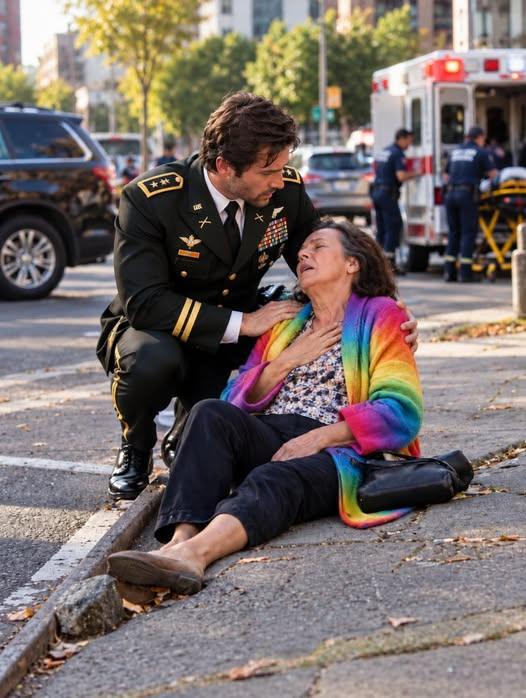
I stopped for a woman dying on the roadside and lost my job for being late, but when I came back for my desk, my whole life changed.
“What the hell do you mean you were helping somebody?”
My boss’s voice cracked across the office so hard that even the interns by the copy room went silent.
I was still standing there with my laptop bag over one shoulder, my tie half crooked, my chest heaving from running in from the parking lot.
The conference room behind him was empty.
The clients were gone.
On the table sat the pitch deck I had stayed up half the night polishing, still glowing on the wall monitor like a joke nobody wanted to laugh at.
“I had an emergency,” I said, trying to catch my breath. “A woman collapsed on the side of the road. She grabbed her chest and went down. I couldn’t just leave her there.”
Nick stared at me like I’d spoken a foreign language.
His jaw tightened.
He took two slow steps toward me and lowered his voice, which somehow made it worse.
“Was it your wife?”
“No.”
“Your mother?”
“No.”
He let out a short, angry laugh and looked around at the others, like he needed witnesses for what he was about to say.
“So let me get this straight,” he said. “You blew off an eight-thirty presentation with our biggest potential account because some random woman on the roadside looked sick.”
“She didn’t look sick,” I said. “She collapsed in my arms.”
He threw one hand up.
“And because of that, we lost the account.”
My mouth went dry.
I looked toward the conference room again, as if maybe the clients would magically still be there, sitting patiently with coffee, waiting for me to explain myself.
They weren’t.
All that was left was the smell of burnt office coffee, printer toner, and the slow death of the best opportunity our little agency had seen in months.
“Nick, I’m sorry,” I said. “I am. But what was I supposed to do? Drive past her?”
“Yes,” he snapped.
The room went even quieter.
For a second, I honestly thought I’d heard him wrong.
He stepped closer.
“Yes, Sebastian. You were supposed to keep driving. You had a responsibility here. You had a team depending on you. You had clients waiting. We are not a charity. We are a business.”
My ears started ringing.
I’d worked at that agency for almost three years.
I had taken late calls, skipped lunches, stayed weekends, saved bad campaigns, soothed angry customers, trained new hires, pulled numbers out of thin air when nobody else could.
I’d been the first one in and the last one out so many times that the cleaning crew knew my daughters’ names.
And now I was being told I should have left a stranger on the side of the road because a pitch mattered more.
“Nick,” I said, and I heard my own voice shake. “I have given everything to this place.”
He didn’t even blink.
“I don’t care,” he said. “Clean out your things. You’re done here.”
I just stood there.
My brain refused to catch up.
A few people looked away.
A few looked at me with something like pity.
One of the account managers shifted in her seat and stared down at her keyboard as if the letters suddenly fascinated her.
Nobody said a word.
Nick nodded toward the hallway.
“That’s the end of it.”
I wish I could say I walked out with dignity.
I wish I could say I gave him some speech about loyalty and humanity and how one day he’d regret it.
What actually happened was uglier than that.
My face got hot.
My throat closed.
And before I could stop it, tears stung my eyes.
I turned away so fast I nearly dropped my bag.
I heard a chair scrape behind me, then nothing but the pounding of my own footsteps as I left the office I had poured myself into and walked straight into the bright morning sun like a man getting shoved out of his own life.
The second I got inside my car, I locked the doors.
Then I gripped the steering wheel and screamed.
Not words—just raw, broken sound. And I had no idea that the woman I’d stopped for was about to come looking for me.
For several minutes, I sat in that parking lot with my forehead pressed against the steering wheel.
I didn’t know what hurt more.
Losing the job.
Being humiliated in front of everyone.
Or realizing that three years of my life could be erased in less than three minutes.
My phone buzzed in the cup holder.
I ignored it.
It buzzed again.
Then again.
For one stupid second, hope rose in my chest.
Maybe Nick had cooled down.
Maybe somebody from HR wanted to talk.
Maybe one of my coworkers had finally found enough courage to tell him he was wrong.
I grabbed the phone.
It was my wife.
LAURA: How did the pitch go?
I stared at the message until the words blurred.
Laura had packed my lunch that morning while reminding our youngest daughter, Sophie, not to leave her science project on the kitchen table again.
She’d kissed me at the door.
“Go land the whale,” she’d said.
The whale.
That was what everyone at the agency called the account.
Vantage International.
One of the largest privately held logistics and infrastructure companies in the country.
If we landed them, Nick had said, we could hire fifteen more people.
We could expand.
We could stop chasing small regional clients who argued over every invoice.
woman dying on the roadside and lost my job for being late
For several minutes, I sat in that parking lot with my forehead pressed against the steering wheel.
I didn’t know what hurt more.
Losing the job.
Being humiliated in front of everyone.
Or realizing that three years of my life could be erased in less than three minutes.
My phone buzzed in the cup holder.
I ignored it.
It buzzed again.
Then again.
For one stupid second, hope rose in my chest.
Maybe Nick had cooled down.
Maybe somebody from HR wanted to talk.
Maybe one of my coworkers had finally found enough courage to tell him he was wrong.
Advertisement
I grabbed the phone.
It was my wife.
LAURA: How did the pitch go?
I stared at the message until the words blurred.
Laura had packed my lunch that morning while reminding our youngest daughter, Sophie, not to leave her science project on the kitchen table again.
She’d kissed me at the door.
“Go land the whale,” she’d said.
The whale.
That was what everyone at the agency called the account.
Vantage International.
One of the largest privately held logistics and infrastructure companies in the country.
If we landed them, Nick had said, we could hire fifteen more people.
We could expand.
We could stop chasing small regional clients who argued over every invoice.
Advertisement
And if I landed them, Nick had practically promised me the creative director position I had been working toward for the past eighteen months.
More money.
Better insurance.
Maybe enough breathing room that Laura wouldn’t have to keep putting groceries on a credit card during the last week of every month.
Maybe enough for us to finally fix the leaking roof over Sophie’s room.
All of that had vanished because I stopped my car.
I typed three different replies.
Deleted all three.
Finally, I wrote:
ME: It didn’t go well. I’m coming home early.
Three dots appeared almost immediately.
LAURA: What happened?
I locked the phone.
I couldn’t tell her yet.
I couldn’t write the words.
I got fired.
The sentence felt too final.
Too heavy.
Like once I said it out loud, it would become real.
So instead, I started the car.
That was when I noticed the blood.
A dark red smear ran across the cuff of my white dress shirt.
Her blood.
The woman’s.
I looked down at my hands.
There was another faint streak dried between my thumb and index finger.
And suddenly I was back there.
Back on Route 18.
Back twenty-seven minutes before the presentation that had destroyed my career.
I had been driving too fast.
Not recklessly, but fast enough that every yellow light felt like a personal insult.
My phone had been connected to the car, Nick’s name flashing across the screen every few minutes.
7:56.
7:58.
8:03.
“Where are you?”
“Almost there.”
“You need to be in the conference room by eight-fifteen.”
“I know.”
“Sebastian, do not screw this up.”
“I know.”
I knew.
That was why I almost didn’t notice her.
A silver sedan sat crooked on the shoulder with its hazard lights blinking.
Advertisement
The driver’s door was open.
A woman in a gray coat stood beside it.
At first I thought she was looking at her tire.
Then she stumbled.
Her hand went to her chest.
And she dropped.
There wasn’t time to think.
I slammed on the brakes.
A horn screamed behind me.
I pulled onto the shoulder and ran back.
“Ma’am?”
She wasn’t moving.
“Ma’am, can you hear me?”
I knelt beside her.
She looked to be in her late sixties, maybe early seventies.
Elegant even lying in gravel, with silver hair pinned neatly behind her head and a pearl earring half buried against her neck.
Advertisement
Her eyes fluttered.
Her fingers closed around my wrist.
Hard.
“Phone,” she whispered.
“I’m calling an ambulance.”
“No.”
“What?”
“Don’t… call…”
Then her body jerked.
Her eyes rolled back.
Whatever she wanted to say disappeared.
I called 911.
I stayed with her.
I checked her breathing.
The dispatcher walked me through what to do until the paramedics arrived.
Eleven minutes.
That was all.
Eleven minutes.
But when you’re kneeling beside somebody who might die in front of you, eleven minutes feels like an entire lifetime.
The ambulance crew loaded her onto a stretcher.
One of the paramedics asked if I was family.
Advertisement
“No.”
“You know her?”
“No.”
He looked surprised.
“You just stopped?”
I nodded.
He gave me a look I hadn’t understood at the time.
Then they shut the doors.
I drove away.
I never even learned her name.
Now, sitting outside the agency with no job, no promotion, and no idea how I was going to tell my family, I laughed.
A bitter, exhausted laugh.
“Hope you made it,” I whispered.
Then I drove home.
Laura knew something was wrong before I stepped through the door.
She was sitting at the kitchen table with her laptop open, glasses pushed into her hair, an untouched mug of coffee beside her.
Advertisement
She looked at me.
Then at the clock.
Then back at me.
“What happened?”
I placed my keys on the counter.
“I got fired.”
She froze.
I watched the sentence hit her.
Her shoulders changed first.
Then her face.
“What?”
“Nick fired me.”
“Why?”
I leaned against the counter.
There was no graceful way to explain it.
“I was late to the Vantage presentation.”
Laura stared at me.
“You were late?”
“I stopped for someone.”
“For someone?”
“A woman collapsed on Route 18.”
Her confusion vanished.
“What?”
“She was on the shoulder. I saw her go down. I stopped. Called an ambulance. Stayed until they came.”
Advertisement
“And Nick fired you for that?”
I nodded.
Laura stood.
For a moment, I thought she was angry at me.
Instead she said, “That son of a bitch.”
I almost smiled.
Almost.
Then she came around the table and wrapped her arms around me.
That was when something inside me cracked again.
“I’m sorry,” I whispered.
“For what?”
“The mortgage. The girls. Everything.”
“We’ll figure it out.”
“You don’t know that.”
“No,” she said. “I don’t. But I know you weren’t going to leave a dying woman in a ditch.”
I pulled away.
“You know what the worst part is?”
Advertisement
“What?”
“For maybe five minutes in that parking lot, I wished I had.”
Laura said nothing.
“I actually sat there thinking, what if I’d kept driving? What if I had pretended I didn’t see her?
I’d still have my job.”
“You don’t know that.”
“I’d have made the pitch.”
“And maybe she’d be dead.”
I looked away.
Laura reached for my hand.
“Sebastian.”
I couldn’t meet her eyes.
She squeezed my fingers.
“Our daughters are going to grow up knowing their father stopped.”
I swallowed hard.
“That doesn’t pay the electric bill.”
“No.”
She gave me the smallest, saddest smile.
Advertisement
“But it matters.”
That night, we didn’t tell the girls.
We ate spaghetti.
Sophie complained about mushrooms in the sauce.
Our older daughter, Lily, argued that eleven was absolutely old enough to have her own phone.
I sat at the dinner table pretending my life hadn’t collapsed while both of them fought over the last piece of garlic bread.
It was strangely comforting.
Normal problems.
Small problems.
Problems that could be solved by cutting bread in half.
After they went to bed, Laura and I sat in the living room and opened our bank account.
It was worse than I thought.
We had enough savings for maybe six weeks if nothing went wrong.
Advertisement
Nothing ever waits six weeks to go wrong.
The roof needed repairing.
Our car was six months from being paid off.
Lily needed braces.
Laura’s freelance bookkeeping work helped, but it wasn’t steady.
I stared at the numbers.
“I’ll call recruiters tomorrow.”
“You should.”
“I can pick up contract work.”
“We’ll make it work.”
My phone rang.
Unknown number.
I almost ignored it.
Laura glanced at me.
“Could be work.”
I answered.
“Hello?”
“Is this Sebastian Cole?”
A man’s voice.
Professional.
Controlled.
“Yes.”
“My name is Daniel Mercer. I’m trying to locate the man who assisted a woman on Route 18 this morning.”
Advertisement
I stood.
Laura immediately looked up.
“Yes. That was me.”
There was a pause.
“Would you mind confirming what vehicle you were driving?”
“A blue Honda Accord.”
“And approximately what time did you stop?”
“Just after eight.”
Another pause.
I frowned.
“Who is this?”
“The woman you assisted survived.”
I closed my eyes.
Something warm loosened inside my chest.
“She did?”
“Yes.”
“Thank God.”
Laura mouthed, Is she okay?
I nodded.
The man continued.
“She asked us to find you.”
“Us?”
“Mr. Cole, would you be available tomorrow morning?”
“For what?”
“To meet with her.”
Advertisement
I hesitated.
“I don’t even know her name.”
“You will tomorrow.”
“That’s a little strange.”
“I understand.”
“Is she in the hospital?”
“No.”
That surprised me.
“She was released?”
Another pause.
“Ms. Vale has access to private medical care.”
Vale.
The name brushed against something in my memory.
I couldn’t place it.
“Ms. Vale?”
“Yes.”
“First name?”
“Evelyn.”
Laura was watching me.
The man gave me an address downtown.
Not a hospital.
Not a house.
An office tower.
Forty-seven floors of mirrored glass in the financial district.
“I’ll be there,” I said.
Advertisement
When I hung up, Laura asked, “Who was she?”
“Evelyn Vale.”
Laura stared at me.
Then she blinked.
“Wait.”
“What?”
“Evelyn Vale?”
“You know her?”
She grabbed her phone.
Her thumbs flew across the screen.
Then her face changed.
“Oh my God.”
“What?”
She turned the screen toward me.
The photograph showed the same woman I’d knelt beside on the roadside.
Same silver hair.
Same sharp cheekbones.
Same calm, pale blue eyes.
Except in the photograph she wasn’t lying in gravel.
She was standing beside a former president at an economic summit.
The headline below her picture read:
Advertisement
EVELYN VALE RETURNS TO VANTAGE BOARD AFTER FIVE-YEAR ABSENCE.
My stomach tightened.
“Vantage?”
Laura looked up.
“Sebastian.”
I took the phone.
I read the article.
Then another.
Then another.
Evelyn Vale.
Founder.
Former CEO.
Largest individual shareholder.
The woman credited with turning a two-truck freight operation founded in her father’s garage into Vantage International.
The same Vantage International whose account I had lost that morning.
The same Vantage International Nick had fired me for failing to pitch.
I sat down slowly.
“You’ve got to be kidding me.”
Laura whispered, “You saved the founder of the company you were supposed to pitch.”
I stared at her picture.
Suddenly Nick’s words echoed in my head.
Some random woman.
I laughed.
This time, there was no humor in it.
The next morning, I put on my second-best suit.
My best one still had Evelyn Vale’s blood on the cuff.
I arrived twenty minutes early.
The lobby of Vantage Tower looked like the kind of place where ordinary people instinctively lowered their voices.
Marble floors.
Black stone walls.
Security guards in tailored suits.
A sculpture in the center that probably cost more than my house.
I gave my name at reception.
The woman behind the desk looked at her screen.
Then she looked at me differently.
“Mr. Cole.”
“Yes.”
“Ms. Vale is expecting you.”
A man appeared from behind the security gates.
I recognized his voice before he introduced himself.
“Daniel Mercer.”
He was in his early fifties, broad shouldered, with iron-gray hair and the expression of a man who noticed everything.
We shook hands.
“Thank you for coming.”
“How is she?”
“Recovering.”
He led me to a private elevator.
There were no buttons inside.
The doors closed.
I felt my stomach rise as we climbed.
“Mr. Mercer.”
“Daniel is fine.”
“Why does she want to see me?”
He glanced at me.
“She’ll tell you.”
That was apparently all I was getting.
The elevator opened directly into an office that occupied half the top floor.
And there she was.
Evelyn Vale stood beside the windows.
Alive.
For a second, I couldn’t speak.
Seeing somebody upright after watching them collapse changes something in your brain.
She wore dark trousers and a cream-colored blouse.
No gray coat.
No gravel in her hair.
No oxygen mask.
She looked smaller than she had on the roadside.
But stronger.
When she saw me, her expression softened.
“Sebastian.”
“Ms. Vale.”
She crossed the room.
“You look disappointed.”
“What?”
“I’m standing.”
“No. God, no.”
She smiled.
“I’m joking.”
“I’m glad you’re okay.”
“That makes two of us.”
She extended her hand.
I took it.
Her grip was firm.
“Sit with me.”
There was no giant executive desk.
Just chairs near the glass overlooking the city.
Daniel remained near the elevator.
Evelyn poured two glasses of water.
“I owe you my life.”
“You don’t owe me anything.”
Her eyes flicked toward mine.
“People always say that when they want to appear noble.”
“I’m not trying to appear noble.”
“I know.”
She handed me a glass.
“That is why I believe you.”
I sat.
She remained standing for a moment, studying me.
“Do you know how many cars passed me before you stopped?”
“No.”
“Seven.”
I frowned.
“You remember?”
“I remember more than you might expect.”
Her voice grew quieter.
“I had been feeling pressure in my chest for approximately fifteen minutes. I told myself it was indigestion. Then dizziness.
Then pain down my arm.”
“You should’ve called an ambulance.”
“Yes.”
“Why didn’t you?”
She looked toward Daniel.
He looked away.
Interesting.
“I dislike ambulances.”
“That seems like a bad reason.”
Evelyn smiled faintly.
“You speak to everyone like this?”
“No. Mostly billionaires.”
That actually made her laugh.
Then she winced and touched her ribs.
“Careful.”
“I’m fine.”
“You collapsed yesterday.”
“Yes, Sebastian. I was there.”
I liked her.
I hadn’t expected to.
She settled into the chair across from me.
“Daniel tells me your employer dismissed you.”
My jaw tightened.
“How did you know?”
“I asked Daniel to find you. Daniel is thorough.”
“Apparently.”
“Why were you late?”
I stared at her.
“You know why.”
“I want to hear you say it.”
“Because I stopped for you.”
“And your employer considered that unacceptable?”
“He considered losing your company’s account unacceptable.”
Something changed in her eyes.
“So he fired you.”
“Yes.”
“For helping me.”
“Yes.”
Her fingers tapped once against the armrest.
“Name?”
“You know the agency.”
“I do.”
“Then you know Nick.”
“Say his name.”
“Nick Halpern.”
She nodded.
“Thank you.”
I shifted in my chair.
“If this is about punishing him, I’m not asking for that.”
She tilted her head.
“You think I invited you here so you could ask me to destroy your former employer?”
“I don’t know why you invited me.”
“Fair.”
She picked up a folder from the table beside her.
“I invited you because yesterday morning you had something to gain by leaving me there.”
I said nothing.
“And something to lose by stopping.”
“I didn’t know that at the time.”
“Exactly.”
She placed the folder between us.
“Do you understand how rare that makes what you did?”
“I think most people would stop.”
“Seven did not.”
“You don’t know what they saw.”
“Neither did you.”
I looked down at the folder.
“What is that?”
“A job.”
I looked back at her.
She said it as casually as if she were offering me coffee.
“A job?”
“Yes.”
“For doing what?”
“Initially?”
Her mouth twitched.
“Listening.”
She opened the folder.
The first page had the Vantage logo.
Below it:
DIRECTOR OF STRATEGIC COMMUNICATIONS — EXECUTIVE OFFICE.
I almost laughed.
“I’m not qualified for this.”
“Your résumé disagrees.”
“You have my résumé?”
“Daniel.”
Daniel didn’t look remotely apologetic.
Evelyn continued.
“You have spent nearly a decade in marketing and strategic communications. You led crisis campaigns.
You rebuilt three accounts after senior managers nearly lost them.
You increased client retention at your current—former—agency by twenty-eight percent over two years.”
I stared at her.
“How do you know all of that?”
“I read.”
“My salary—”
“Is insulting.”
I stopped.
She turned the page.
My eyes landed on the number.
Then I read it again.
It was more than double what Nick had paid me.
There was also a signing bonus.
A number big enough to pay off our credit cards, fix the roof, put something into savings, and maybe let me breathe for the first time in years.
I closed the folder.
“No.”
Evelyn’s eyebrows rose.
Daniel actually looked at me.
“No?”
“I can’t take this.”
“Why?”
“Because I pulled over.”
“Yes.”
“I don’t want charity.”
Her expression hardened.
“This is not charity.”
“It looks a lot like it.”
“Then look harder.”
She leaned forward.
“I have spent forty-one years building companies. Do you know what skill is hardest to hire?”
I said nothing.
“Judgment.”
She tapped the folder.
“I can hire intelligence. Degrees are plentiful. Ambition is everywhere. I can purchase expertise by the hour.”
Her eyes locked onto mine.
“But I cannot easily purchase judgment under pressure.”
I thought about Nick.
You were supposed to keep driving.
Evelyn continued.
“When presented with conflicting priorities, you chose the one that could not be repaired later.”
“That doesn’t mean I can run strategic communications for Vantage.”
“No.”
She sat back.
“Your experience means you can do that.”
I opened the folder again.
Something still bothered me.
“Why did your team leave Nick’s pitch?”
“Because I was hospitalized.”
I blinked.
“Our executives received word during the meeting.”
“So they left.”
“Yes.”
I almost laughed.
Nick had fired me because the clients left.
The clients had left because the woman I stopped to help was their founder.
“You’ve got to appreciate the irony,” Evelyn said.
“I’m trying not to.”
“Why?”
“Because I’m unemployed.”
“Not necessarily.”
She nodded toward the folder.
I picked it up.
“Can I talk to my wife?”
“I would be concerned if you didn’t.”
“When do you need an answer?”
“Monday.”
It was Wednesday.
I stood.
“Thank you.”
Evelyn stood too.
Then her expression changed.
“Sebastian.”
“Yes?”
“There is something else.”
Of course there was.
She walked to a cabinet and removed my old leather wallet.
I stared.
“That’s mine.”
“You left it on the roadside.”
I checked my pocket instinctively.
I had been using an old backup wallet since yesterday and assumed I had dropped the other one somewhere in the panic.
“A state trooper found it beside my car.”
She handed it to me.
“Thanks.”
But she didn’t let go immediately.
Her gaze had dropped toward the wallet.
“What?”
She slowly released it.
“Nothing.”
I knew that tone.
“What?”
She looked at me again.
“When I opened it to identify you, I saw the photograph behind your license.”
My throat tightened.
“My father?”
“Yes.”
There was a tiny old photograph I had carried for years.
My father and me at a baseball game when I was eight.
He had died when I was sixteen.
Cancer.
Or at least, that was what I had always been told.
Evelyn’s face had gone pale.
“You knew him?”
A long silence.
Then she said, “I thought I did.”
My pulse changed.
“What does that mean?”
Daniel shifted near the door.
Evelyn noticed.
Whatever had opened in her expression closed again.
“You should go home,” she said.
“Ms. Vale.”
“Talk to your wife.”
“You knew my father?”
She walked away from me.
“Monday, Sebastian.”
“That isn’t an answer.”
“No.”
She looked back.
“It isn’t.”
The elevator doors opened behind me.
Daniel gestured politely.
Conversation over.
I should have pushed harder.
I didn’t.
Maybe because I was exhausted.
Maybe because the job offer had scrambled my brain.
Maybe because when someone offers to double your salary and then tells you they recognize your dead father, your mind can only process one impossible thing at a time.
I rode down forty-seven floors staring at the photograph in my wallet.
Dad looked exactly as I remembered him.
Dark hair.
Crooked grin.
His arm around my narrow eight-year-old shoulders.
I turned the picture over.
Nothing.
Just faded paper.
I drove home.
Laura thought the offer was a scam until I showed her the paperwork.
Then she cried.
Actually cried.
She sat at the kitchen table reading the salary page over and over.
“This is real?”
“Apparently.”
“This number?”
“Yes.”
“For you?”
“Thanks.”
“You know what I mean.”
“I know.”
She covered her mouth.
“We could pay everything off.”
“Most things.”
“The roof.”
“Yes.”
“Lily’s braces.”
“Yes.”
She looked at me.
“Why do you look miserable?”
I put the wallet on the table.
“Evelyn knew Dad.”
Laura’s excitement disappeared.
“What?”
“She saw his picture. She recognized him.”
“Maybe he worked for Vantage.”
“He sold insurance.”
“Before that?”
“I don’t know.”
Laura frowned.
“Did you ask your mom?”
My mother.
Of course.
I called her immediately.
She answered on the sixth ring.
“Sebastian?”
“Hey, Mom.”
“You sound strange.”
“I need to ask you something.”
“Okay.”
“Did Dad ever know anyone named Evelyn Vale?”
Silence.
Not confusion.
Silence.
There is a difference.
“Mom?”
“Why?”
My stomach dropped.
“You know her.”
“Sebastian, why are you asking me this?”
“I met her.”
Another silence.
“How?”
“Mom.”
“How did you meet Evelyn Vale?”
“She collapsed on the side of the road.”
“What?”
“I stopped. Helped her. She survived. Long story.”
“Oh my God.”
“Today she offered me a job.”
My mother breathed out.
“No.”
I frowned.
“What?”
“No.”
“Mom—”
“You are not taking that job.”
I looked at Laura.
She was watching me.
“Why?”
“Because I said so.”
I almost laughed.
“I’m thirty-eight years old.”
“I know exactly how old you are.”
“Then tell me why.”
“Sebastian.”
“What did Dad have to do with Evelyn Vale?”
Her voice dropped.
“Nothing good.”
The room suddenly felt colder.
“What does that mean?”
“You leave that woman alone.”
“She saved my career.”
“She has ruined enough.”
“Ruined what?”
“Your father.”
I stopped breathing.
Laura mouthed, What?
I shook my head.
“Dad died of cancer.”
My mother didn’t answer.
“Mom.”
“I have to go.”
“No, you don’t.”
“I’m sorry.”
“Did Dad work for her?”
Click.
The call ended.
For a second, I just held the phone against my ear.
Then I called back.
Straight to voicemail.
Again.
Voicemail.
Laura whispered, “What did she say?”
I lowered the phone.
“She told me not to take the job.”
“Why?”
“She said Evelyn ruined my father.”
That night, I barely slept.
The next morning, I returned to the agency.
Not because Nick asked me to.
He hadn’t.
I still had a cardboard box worth of personal things sitting in my desk.
A photo of the girls.
Two coffee mugs.
A spare phone charger.
A small cactus Sophie gave me for Father’s Day.
I could have asked someone to ship everything.
Instead, anger pulled me back.
Maybe I wanted Nick to see me.
Maybe I wanted him to know I hadn’t disappeared.
The receptionist looked uncomfortable when I walked in.
“Sebastian.”
“I’m just getting my things.”
She nodded.
“Nick’s in a meeting.”
“Good.”
Most of the office avoided eye contact.
Maya from account management didn’t.
She followed me to my desk.
“I’m sorry.”
I pulled open a drawer.
“For what?”
“For yesterday.”
“You didn’t fire me.”
“No.”
“You didn’t say anything either.”
That hit her.
She looked down.
“You’re right.”
I immediately regretted saying it.
Not because it wasn’t true.
Because she looked like she already knew.
“I’m sorry,” I said.
“Don’t be.”
She helped me pack.
The whole thing took eleven minutes.
Funny.
Eleven minutes to save Evelyn.
Eleven minutes to erase three years from a desk.
I placed the cactus carefully in the box.
Then Nick’s office door opened.
He saw me.
His expression hardened.
“What are you doing here?”
“Getting my things.”
“You should’ve contacted HR.”
“I figured I could manage a coffee mug without legal supervision.”
Maya suddenly found somewhere else to be.
Nick approached.
“I don’t want drama.”
“Neither do I.”
“Then take your things and go.”
I picked up the box.
Something inside me had changed since yesterday.
Maybe it was Evelyn’s offer.
Maybe it was my mother’s fear.
Maybe it was simply the knowledge that Nick didn’t own my future anymore.
I looked at him.
“You know who the woman was?”
His eyes narrowed.
“What woman?”
“The random woman.”
He went still.
I smiled.
“Evelyn Vale.”
For the first time since I’d known Nick Halpern, I watched the color drain from his face.
“What?”
“Evelyn Vale.”
He stared at me.
“You’re lying.”
“I wish I had a picture of your face.”
“Sebastian.”
“She survived, by the way.”
His mouth opened.
Closed.
Behind him, people were listening.
This time nobody pretended otherwise.
I shifted the box under my arm.
“She asked to see me yesterday.”
Nick stepped closer.
“What did she say?”
There it was.
Fear.
Not regret.
Not shame.
Fear.
“She thanked me.”
“What else?”
“A few things.”
“About us?”
I studied him.
“Why?”
He recovered quickly.
“No reason.”
“That doesn’t look like no reason.”
“Did she mention the Vantage account?”
I smiled.
“You lost the account, Nick.”
His jaw tightened.
“You missed the pitch.”
“Their executives left because their founder was in the hospital.”
Nobody moved.
I could feel the entire office listening.
Nick lowered his voice.
“What did she offer you?”
That surprised me.
“How do you know she offered me anything?”
He looked away for half a second.
That was enough.
“You knew,” I said.
“What?”
“You knew something.”
“Don’t be ridiculous.”
“Why are you scared?”
“I’m not scared.”
“You look terrified.”
His face changed.
“Get out.”
I should have.
Instead, I noticed my desk drawer wasn’t fully closed.
The bottom one.
I had already emptied it.
Or thought I had.
Something white was wedged behind the metal rail.
I set the box down.
Nick’s reaction was immediate.
“Leave it.”
I froze.
“What?”
“That’s company property.”
I looked at the drawer.
Then at Nick.
“It’s my desk.”
“Was your desk.”
Every instinct in me sharpened.
I crouched.
“Sebastian.”
I pulled.
The drawer jammed.
“Stop.”
Now everyone was watching.
I yanked harder.
The drawer came free with a metallic crack.
Behind it sat an envelope.
Old.
Yellowed.
My name written on the front.
SEBASTIAN COLE.
Not typed.
Handwritten.
I knew the handwriting.
I had seen it on birthday cards.
Old school permission slips.
Notes packed in childhood lunches.
My father’s handwriting.
The office disappeared around me.
My fingers went cold.
Nick whispered, “Give me that.”
I slowly turned.
He realized his mistake.
“How long has this been here?”
“I don’t know what it is.”
“You just told me to leave it.”
“I said it’s company property.”
“My name is on it.”
“Sebastian.”
I tore it open.
Inside was a photograph.
Older than the one in my wallet.
Three people stood beside a truck.
A much younger Evelyn Vale.
My father.
And a man I didn’t recognize.
On the side of the truck were faded letters.
VALE FREIGHT.
My stomach turned.
There was a note behind the photograph.
One sentence.
If Evelyn ever finds Sebastian, tell him I failed to destroy the second copy.
I read it twice.
Then a third time.
“What the hell is this?”
Nick said nothing.
I looked up.
He was staring at the photograph.
Not confused.
He knew exactly what it was.
“You knew my father.”
“No.”
“Bullshit.”
“I never met him.”
“Then why was this behind my desk?”
He glanced around the office.
“Everybody get back to work.”
Nobody moved.
“NOW.”
People scattered.
I shoved the note toward him.
“What second copy?”
His eyes flicked over the sentence.
Then toward me.
“I don’t know.”
“You’re lying.”
“Take your box and leave.”
“How did my father’s letter get into this office?”
Nick’s expression hardened.
“I said leave.”
I stepped closer.
“You hired me.”
“So?”
“Three years ago, you called me personally after I sent in my résumé.”
“So?”
“You didn’t even make me do a second interview.”
His nostrils flared.
At the time, I had thought I was lucky.
Now every detail was rearranging itself.
“You knew who I was.”
“No.”
“You knew exactly who I was.”
Security appeared at the end of the hallway.
Nick’s voice dropped.
“You need to go.”
I held up the photograph.
“Does Evelyn know about this?”
Something flickered behind his eyes.
There it was again.
Fear.
Not of me.
Of her.
I slid the photograph and note into my jacket.
Nick grabbed my wrist.
“Give me that.”
The entire office seemed to stop breathing.
I looked at his hand.
Then at him.
“Take your hand off me.”
“Sebastian.”
“Now.”
He released me.
I lifted the box.
“You made one mistake yesterday.”
His face was inches from mine.
“Only one?”
“You fired me before you knew who I had stopped for.”
I walked toward the elevator.
Behind me, Nick said, “If you take that to Evelyn, you’re going to wish I’d never hired you.”
I stopped.
Turned.
“Is that a threat?”
His face had gone strangely calm.
“No.”
He looked at the envelope in my hand.
“It’s a warning.”
The elevator doors opened.
I stepped inside.
Nick remained in the hallway.
Just before the doors closed, he said something that followed me all the way downstairs.
“Ask your mother how your father really died.”
I drove straight to my mother’s house.
She lived forty minutes away in the same little brick house where I had grown up.
I didn’t call first.
When she opened the door and saw my face, she knew.
Not everything.
But enough.
“What happened?”
I took out the photograph.
Her knees nearly gave way.
She gripped the doorframe.
“Where did you get that?”
“My office.”
She looked at me.
“What?”
“It was hidden behind my desk.”
Her eyes filled with panic.
“No.”
“Dad left me a note.”
I showed her.
She didn’t read it.
She backed away.
“I told you to stay away from Evelyn.”
“And I asked you why.”
“You should go home.”
“Nick told me to ask how Dad really died.”
That stopped her.
I stepped inside and closed the door.
“Mom.”
She looked twenty years older.
“Was Dad sick?”
“Yes.”
“Cancer?”
“Yes.”
“Did cancer kill him?”
She closed her eyes.
I felt something terrible moving toward me.
Slowly.
Inevitable.
“Mom.”
“When your father got sick,” she whispered, “the doctors said he had time.”
“How much?”
“A year. Maybe two.”
I waited.
“He died three months later.”
“I know.”
“No.”
She looked at me.
“You know what I told you.”
My stomach twisted.
“What aren’t you telling me?”
She sat on the stairs.
For several seconds she couldn’t speak.
Then she said, “Your father worked for Evelyn Vale before you were born.”
The photograph shook in my hand.
“At Vale Freight?”
“Yes.”
“What did he do?”
“Accounting at first. Then operations.”
“Why did he leave?”
“He found something.”
“The second copy?”
Her eyes snapped up.
“You know about that?”
“No. Dad wrote it.”
She covered her mouth.
“What did he find?”
“I don’t know all of it.”
“Mom.”
“I swear.”
She wiped her eyes.
“He found financial records. Payments. Shell companies. Money moving through ports that didn’t make sense.”
“Illegal?”
“He thought so.”
“What kind of illegal?”
“He never told me. He was trying to protect us.”
“And Evelyn?”
“Your father said Evelyn was involved.”
That didn’t fit.
The woman I met seemed many things.
Sharp.
Powerful.
Secretive.
But I couldn’t connect her to the terror in my mother’s face.
“So Dad confronted her?”
“I don’t know.”
“You said she ruined him.”
“Because after he left Vantage, nobody would hire him.”
My mother’s voice grew bitter.
“Every good position disappeared. Offers were withdrawn. References changed. We nearly lost this house.”
I looked around.
This house.
The place I had thought of as ordinary suddenly felt like evidence.
“Then he sold insurance.”
“Yes.”
“What happened to the documents?”
“He hid them.”
“Where?”
“I don’t know.”
I raised the note.
“Second copy.”
She stared.
“If there was a second copy, he never told me.”
“Why would he leave this for me?”
“I don’t know.”
“And how did it end up behind my desk?”
“I don’t know!”
Her voice cracked.
I stopped.
She was trembling.
I sat beside her.
“Mom.”
Her eyes were wet.
“There’s something else.”
Of course there was.
There was always something else.
“What?”
“The night your father died…”
She struggled to get the words out.
“He called Evelyn.”
My skin prickled.
“What?”
“I heard him.”
“What did he say?”
“Not much.”
She stared at the floor.
“He said, ‘You promised me Sebastian would never be involved.’”
The hallway seemed to tilt.
“Me?”
“Yes.”
“I was sixteen.”
“I know.”
“Why would I be involved in anything?”
“I don’t know.”
“What did Evelyn say?”
“I couldn’t hear her.”
“What happened after the call?”
My mother closed her eyes.
“Your father cried.”
I had seen my father cry once in my life.
The night our dog died.
That was it.
“He cried?”
“He sat at this kitchen table and cried.”
She pointed toward the other room.
“Then he burned papers in the fireplace.”
“What papers?”
“I don’t know.”
“Why didn’t you stop him?”
“Because he was dying, Sebastian!”
Her voice shattered.
“Because I was trying to hold our family together while the man I loved disappeared in front of me!”
Silence swallowed the hallway.
“I’m sorry,” I whispered.
She looked away.
After a long moment, she continued.
“The next morning, I found him unconscious.”
I waited.
“He never woke up.”
My chest tightened.
“You said he died in the hospital.”
“He did.”
“So what is Nick talking about?”
She looked at me.
“The toxicology report.”
“What toxicology report?”
“The doctor found something in his blood.”
Every hair on my arms rose.
“What?”
“A medication he wasn’t prescribed.”
“What medication?”
“I don’t remember the name.”
“What did it do?”
“It slowed his heart.”
I stared at her.
“Are you saying Dad was murdered?”
“No.”
“Then what are you saying?”
“I don’t know!”
She stood.
“The police said he may have taken something for pain. Your father was dying.
They said there was no evidence anyone else gave it to him.”
“But you didn’t believe them.”
She didn’t answer.
“Mom.”
“No.”
Her voice was barely audible.
“I didn’t.”
My phone rang.
Both of us jumped.
Unknown number.
For a second I simply stared at it.
Then I answered.
“Hello?”
“Mr. Cole.”
Daniel.
I stood.
“Daniel.”
“Ms. Vale would like you to come back to the tower.”
I looked at my mother.
“Why?”
Silence.
Then:
“Because someone accessed the restricted archive last night.”
“So?”
“The archive contains historical Vantage personnel files.”
A cold pressure built behind my ribs.
“Including your father’s?”
“Yes.”
“Who accessed it?”
“We don’t know.”
I looked at the photograph in my hand.
Daniel continued.
“There is more.”
I waited.
“The file wasn’t just accessed.”
“What happened?”
“It was destroyed.”
I laughed once.
Not because anything was funny.
“Of course it was.”
“Mr. Cole.”
“What?”
“Do you still have the photograph Evelyn returned to you yesterday?”
“The one from my wallet?”
“Yes.”
“Why?”
Daniel hesitated.
“Because Evelyn believes it may not be the photograph you think it is.”
My pulse stumbled.
“What does that mean?”
“Bring it.”
The call ended.
My mother grabbed my arm.
“Don’t go.”
“I have to.”
“No, you don’t.”
“Mom, somebody hid a message from Dad inside my office.”
“And somebody wanted it hidden.”
“Exactly.”
“You have Laura.”
“I know.”
“You have daughters.”
“I know.”
Her grip tightened.
“That is why your father stopped digging.”
I looked at her.
“What?”
She went pale.
I saw immediately that she had said too much.
“Dad stopped?”
“I didn’t mean—”
“You told me he kept investigating until he died.”
“No.”
“What made him stop?”
She backed away.
“Mom.”
“Sebastian.”
“What happened?”
Her face collapsed.
“They sent him a picture.”
I felt sick.
“Of what?”
She looked at me.
“You.”
I said nothing.
“You were six years old,” she whispered. “Walking out of school.”
The air left my lungs.
“A photograph was waiting on our front porch.”
Her voice trembled.
“You were in it. Backpack. Red jacket. Your teacher behind you.”
“Who sent it?”
“No note. Nothing.”
“But Dad knew.”
“Yes.”
“What did he do?”
“He burned everything that night.”
Everything except a second copy.
I drove to Vantage Tower with my father’s photograph in my jacket and his old warning repeating in my head.
If Evelyn ever finds Sebastian, tell him I failed to destroy the second copy.
Not if Sebastian finds Evelyn.
If Evelyn finds Sebastian.
That distinction bothered me.
By the time I reached the top floor, Daniel was waiting.
No small talk.
“This way.”
He led me past Evelyn’s office into a private conference room.
Evelyn sat alone.
The blinds were closed.
She looked exhausted.
“Close the door.”
Daniel did.
I remained standing.
“You knew my father.”
“Yes.”
No games this time.
“How?”
“He was my friend.”
“My mother says you destroyed his career.”
Pain crossed Evelyn’s face.
“Your mother has every reason to hate me.”
“That’s not an answer.”
“No.”
She looked at the chair.
“Sit.”
“I’m fine.”
“Sebastian.”
“What happened to my father?”
Her eyes met mine.
“I don’t know.”
“That’s convenient.”
“It’s the truth.”
“He called you the night before he died.”
“I know.”
“He told you I was never supposed to be involved.”
Evelyn’s expression changed.
“How do you know that?”
“My mother heard him.”
For the first time, Evelyn looked frightened.
Not billionaire frightened.
Not executive frightened.
Human frightened.
“What exactly did your mother hear?”
I repeated it.
You promised me Sebastian would never be involved.
Evelyn rose slowly.
“Daniel.”
He was already moving.
“What?” I said.
Neither answered.
Daniel stepped into the hall and made a phone call.
“What is going on?”
Evelyn looked at me.
“Show me the photograph.”
I took out my wallet.
Pulled the old baseball photograph free.
She held it under the conference room light.
Then she slipped a fingernail beneath one corner.
The photograph separated.
Two layers.
My mouth went dry.
“What the hell?”
Evelyn peeled carefully.
Behind the picture of my father and me was a paper-thin black square no larger than a postage stamp.
She stared at it.
“Oh, Michael.”
My father’s name.
“What is that?”
“A micro-storage film.”
“You knew it was there?”
“I suspected.”
“How?”
“Because your father taught me the trick.”
My stomach dropped.
“Why?”
“Before cloud storage. Before secure digital archives. When we were young and paranoid, Michael used photographic microfilm.”
“Paranoid about what?”
Evelyn looked at Daniel as he returned.
He locked the door behind him.
“What?”
I demanded.
“What is on it?”
Evelyn held the tiny square up.
“If this is what I think it is…”
She didn’t finish.
Daniel removed a small scanner from a cabinet.
That alone told me everything.
They had expected something like this.
He placed the film beneath it.
Connected the device to a laptop.
The screen flickered.
Folders appeared.
Dozens.
Some dated more than twenty years ago.
Company names.
Payment records.
Shipping routes.
Photographs.
Audio transcripts.
Evelyn sat down hard.
“My God.”
Daniel whispered, “He kept everything.”
I looked at them.
“Everything about what?”
Neither spoke.
I slammed my hand on the table.
“What did my father find?”
Evelyn finally looked at me.
“Vantage wasn’t the company your father was investigating.”
“What?”
“He was investigating the people using it.”
“Who?”
“Politicians. Contractors. Foreign intermediaries. Executives.”
She looked at the files.
“A network.”
“For what?”
“Money laundering. Bribery. Smuggling.”
My heart pounded.
“You knew?”
“Not at first.”
“But later?”
“Yes.”
“And you helped him?”
“Yes.”
That stopped me.
“My mother thinks you destroyed him.”
“I let her think that.”
“Why?”
“To keep her alive.”
Silence.
I stared at Evelyn.
She continued.
“Michael and I discovered the scheme together.”
“But it was your company.”
“My company had grown too quickly. Subsidiaries. contractors. regional operations. People I trusted.”
Her voice tightened.
“They used our network because we were everywhere.”
“So Dad found it.”
“Yes.”
“And tried to expose it.”
“So did I.”
“That doesn’t make sense.”
“It does if you know what happened next.”
She reached across the table.
Opened one folder.
A photograph appeared.
Nick.
Twenty years younger.
Standing beside the unknown man from the photograph I had found behind my desk.
I leaned closer.
“That’s Nick.”
“Yes.”
“He said he never knew my father.”
“He lied.”
“Who’s the other man?”
Evelyn looked at me.
“Nick’s father.”
I stared at her.
“His father?”
“Richard Halpern.”
The name meant nothing to me.
“It should,” Evelyn said.
“Why?”
“He was Vantage’s chief financial officer.”
I looked back at the screen.
My father.
Evelyn.
Richard Halpern.
All standing beside the same truck.
“Nick knew who I was when he hired me.”
“Yes.”
“Why?”
“I don’t know.”
The room suddenly felt too small.
Daniel clicked into another folder.
More documents.
Then an audio file.
Dated three days before my father’s death.
Evelyn went rigid.
“That wasn’t in the original archive.”
“What is it?”
She didn’t answer.
Daniel pressed play.
Static.
Then my father’s voice.
Older.
Weaker.
But unmistakable.
“If anybody is listening to this, Evelyn and I failed.”
I gripped the table.
My father had been dead twenty-two years.
Yet suddenly he was in the room.
“Richard knows about the evidence.”
A cough.
Then:
“I’ve made two copies.”
Evelyn covered her mouth.
“One goes where nobody will find it unless Sebastian is brought into this.”
My heart stopped.
“He doesn’t know anything. Keep him that way.”
Static.
Then Dad again.
“If Evelyn is alive, trust her.”
I looked at Evelyn.
Tears stood in her eyes.
The recording continued.
“If she’s dead…”
A long pause.
“…run.”
The audio ended.
Nobody moved.
Then Daniel’s phone buzzed.
He looked at the screen.
His face changed.
“What?”
Evelyn asked.
He turned the phone toward her.
“What?” I demanded.
Daniel looked at me.
“Security footage.”
“From where?”
“Your former office.”
The footage showed Nick leaving the building the previous night.
11:42 p.m.
He was carrying a small metal lockbox.
My throat tightened.
“The archive breach happened at 12:16,” Daniel said.
“That doesn’t prove anything.”
“No.”
He pulled up another image.
Nick entering Vantage Tower through the underground parking garage.
12:04 a.m.
I stared.
“How did he get inside?”
Evelyn whispered, “Because somebody gave him access.”
Daniel looked at her.
Then at me.
“There are only four executive credentials that can open the restricted archive.”
“Whose?”
Daniel listed them.
His.
Evelyn’s.
The current CEO’s.
And one other.
He stopped.
“Who?” I asked.
Daniel looked at Evelyn.
She closed her eyes.
“Mine,” she whispered.
I stared at her.
“You just said yours.”
“No.”
She looked at me.
“The fourth credential belongs to someone who officially died sixteen years ago.”
My skin went cold.
“Who?”
Daniel turned the laptop.
The screen showed an employee security profile.
A grainy photograph.
A name.
I read it.
Then read it again.
My first thought was that it had to be a mistake.
My second was that someone was playing a sick joke.
Because the man in the photograph looked older.
Thinner.
He had a beard.
Different hair.
But I knew his eyes.
I had looked at those eyes every day of my childhood.
The credential belonged to:
MICHAEL COLE.
My father.
I couldn’t breathe.
“No.”
Evelyn stood.
“Sebastian—”
“No.”
I backed away.
“My father died.”
Nobody answered.
“I was at his funeral.”
Evelyn looked at Daniel.
Daniel looked at the floor.
I felt the room spinning.
“We buried him.”
Evelyn whispered, “I know.”
“What the hell does that mean?”
My phone rang.
Unknown number.
I stared at it.
Nobody moved.
It rang again.
Daniel said, “Don’t answer.”
I looked at him.
Then at Evelyn.
Then at my father’s name glowing on the screen.
The phone rang a third time.
I answered.
“Hello?”
Nothing.
Then breathing.
Slow.
Ragged.
A man’s voice.
“Sebastian.”
My blood turned to ice.
I knew that voice.
Older.
Broken.
Almost erased by time.
But children memorize their parents in ways they never understand.
“Dad?”
Evelyn grabbed the edge of the table.
The man on the phone inhaled sharply.
Then whispered six words that changed every memory I had of my life.
“Do not trust the woman beside you.”
The line went dead.
And when I looked up, Evelyn Vale wasn’t shocked.
She was crying.
“Dad?”
The word barely came out of my mouth.
The call was dead.
I stared at my phone.
Evelyn was crying.
Not the quiet kind of crying.
She looked terrified.
I turned toward her.
“You knew.”
She shook her head.
“I knew he might be alive.”
“Might?”
Daniel stepped forward.
“Sebastian, listen to me.”
“No.”
I backed away.
“You both knew.”
Evelyn wiped her tears.
“Your father contacted me six years ago.”
My entire body went cold.
“Six years?”
“Yes.”
“And you never told me?”
“I was trying to protect you.”
I laughed bitterly.
“Everyone keeps saying that.”
I pointed at the phone.
“My mother said Evelyn ruined him. You said my father was dead. Now a man with his voice calls me.”
Evelyn whispered:
“Because your father wanted you to believe he was dead.”
“Why?”
She looked at Daniel.
Then finally answered.
“Because someone was trying to kill him.”
Silence.
I stared at her.
“Who?”
“Richard Halpern.”
The name hit me.
Nick’s father.
Vantage’s former CFO.
The man from the photograph.
“But he’s dead too.”
Evelyn shook her head.
“No.”
I felt dizzy.
“You’re telling me my father and Richard Halpern are both alive?”
“No.”
She looked toward the screen.
“Richard is dead.”
“Then why was he involved?”
“Because your father discovered what he had done.”
Daniel opened another file on the laptop.
Bank statements appeared on the screen.
Transfers.
Shell companies.
Accounts in three different countries.
My father’s name appeared beside them.
I stared.
“What am I looking at?”
“Twenty-two years ago, your father discovered that Richard had been stealing from Vantage.”
“Millions?”
“More.”
Evelyn pointed at another document.
“Richard had created a network of fake companies. Money disappeared from Vantage and eventually returned through those companies.”
“And Dad found it.”
“Yes.”
“What happened?”
“He was supposed to testify.”
I swallowed.
“But then he died.”
Evelyn looked at me.
“No.”
My heart stopped.
“He disappeared.”
I stared at her.
“You mean the funeral…”
“Wasn’t him.”
I couldn’t speak.
Evelyn continued.
“Your father knew Richard would come after you if he stayed. So he disappeared and allowed everyone to believe he had died.”
I shook my head.
“You let me grow up thinking my father was dead.”
“I was trying to keep you alive.”
“You don’t get to decide that for me!”
She flinched.
For the first time, I saw the pain on her face.
“I know.”
Daniel stepped closer.
“There’s something else.”
I turned.
“What?”
He opened a photograph.
It showed a man standing outside a warehouse.
Older.
Gray beard.
Baseball cap.
But the eyes were unmistakable.
My father’s eyes.
“When was this taken?”
“Three days ago.”
My knees nearly gave out.
“Where?”
Daniel hesitated.
“Two hours from here.”
“Take me there.”
Evelyn immediately said:
“No.”
I looked at her.
“Why?”
“Because if your father contacted you, then he knows they found him.”
“Who?”
She didn’t answer.
Then the laptop suddenly went black.
Every light in the office went out.
Daniel reached for his phone.
“Stay where you are.”
A second later, the emergency lights came on.
Red.
Flashing.
And then we heard a sound from the hallway.
A door opening.
Daniel whispered:
“Someone’s inside.”
We froze.
Footsteps approached.
Slowly.
Then stopped outside the office.
A man’s voice came through the door.
“Evelyn.”
She closed her eyes.
I recognized the voice.
It was the same voice from the phone.
My father.
The door opened.
A man stood there.
Older.
Thinner.
Gray hair.
A scar above his eyebrow.
But I knew him.
I knew him before my brain could accept it.
“Dad?”
His face broke.
“Sebastian.”
I couldn’t move.
He walked toward me.
I stepped back.
“You’re alive.”
“Yes.”
“You watched me grow up.”
He nodded.
“You watched my mother raise me.”
“Yes.”
“You missed everything.”
His eyes filled with tears.
“Every birthday.”
He swallowed.
“Every Christmas.”
“Why?”
“Because I thought staying away was the only way to keep you alive.”
I shook my head.
“That wasn’t your decision.”
“I know.”
“Then why did you make it?”
He looked at Evelyn.
“Because she was the only person I trusted.”
I turned toward her.
She was crying.
My father continued.
“Richard found out I had copied the evidence.”
“Then why didn’t you go to the police?”
“Because Richard controlled people inside the company. And he had friends in places where the police couldn’t protect us.”
Daniel interrupted.
“He’s telling the truth.”
I looked at him.
“How do you know?”
“Because I helped him disappear.”
I stared at Daniel.
“You?”
He nodded.
“I was twenty-six. Your father saved my life once. I owed him.”
My father stepped closer.
“There was one person we never suspected.”
I frowned.
“Who?”
He looked at me.
“Nick Halpern.”
My stomach dropped.
“Nick?”
“Richard’s son.”
“Why did he hire me?”
“Because he knew exactly who you were.”
I remembered Nick’s face.
The way he had looked at me when I said Evelyn Vale’s name.
The fear.
The sudden silence.
I whispered:
“He wasn’t trying to fire me because I was late.”
My father shook his head.
“No.”
“Then why?”
“Because he knew Evelyn had found you.”
I felt cold.
“He wanted me away from Vantage.”
“Yes.”
“Why?”
My father looked at Evelyn.
“Because the evidence was never destroyed.”
I stared at them.
“Where is it?”
My father smiled sadly.
“You already have it.”
I froze.
“My wallet?”
“No.”
He pointed toward my jacket.
“The old photograph.”
I pulled it out.
The picture of my father and me at the baseball game.
I turned it over.
My father said:
“Look at the corner.”
I examined it.
A tiny piece of the photograph was thicker than the rest.
Daniel handed me a small knife.
I carefully opened the back.
Something tiny fell into my palm.
A memory card.
I stared at it.
“All these years…”
My father nodded.
“Your grandfather hid it there before he died.”
“What is on it?”
“The evidence.”
“Against Richard?”
“Against everyone.”
I looked at Evelyn.
“And Nick?”
My father nodded.
“He knew.”
Suddenly, a loud crash came from downstairs.
Daniel looked toward the door.
“We have to leave.”
My father grabbed my shoulder.
“Now.”
We ran.
Down the emergency stairs.
Three floors.
Five.
Seven.
Behind us, footsteps echoed.
Someone was following.
We reached the underground garage.
Daniel unlocked a black SUV.
“Get in!”
We jumped inside.
The vehicle accelerated.
I looked through the rear window.
Two black cars were leaving the building behind us.
“They’re following us.”
My father looked at Daniel.
“Take Route 9.”
Daniel shook his head.
“They’ll expect that.”
“Then where?”
I answered.
“Route 18.”
Everyone looked at me.
“The place where I found Evelyn.”
My father smiled.
“Good.”
We drove for twenty minutes.
Then my phone rang.
Nick.
I answered.
His voice was calm.
“You should have taken the job, Sebastian.”
I said nothing.
“You have no idea what you’ve uncovered.”
“I’m not interested in threats.”
“This isn’t a threat.”
He paused.
“It’s a warning.”
“Then warn me.”
“You’re trusting the wrong people.”
I looked at my father.
Nick continued:
“Ask your father what happened to the real evidence.”
“What do you mean?”
Silence.
Then:
“Ask him why Richard’s money was transferred into an account under Evelyn’s name.”
The call ended.
I looked at Evelyn.
She didn’t speak.
“Is it true?”
She closed her eyes.
“Yes.”
My father stared at the floor.
“Evelyn didn’t steal the money.”
“Then why was it in her account?”
“To hide it.”
I shook my head.
“From whom?”
My father looked at me.
“From Nick.”
I finally understood.
Nick wasn’t trying to protect Vantage.
He was trying to recover the money his father had stolen.
The entire company had been built on a secret.
And my father had spent twenty-two years hiding the proof.
We arrived at the old warehouse.
My father opened a rusted metal door.
Inside was a small room.
A desk.
Two chairs.
An old computer.
And hundreds of boxes.
He walked to one.
Opened it.
Inside were documents.
Photographs.
Bank records.
Contracts.
Everything.
He looked at me.
“I wanted to give you your life back.”
I shook my head.
“You can’t give back twenty-two years.”
“I know.”
I looked at him.
“But you can stop lying.”
He nodded.
“I can.”
I picked up the memory card.
“We finish this.”
Three days later, federal investigators entered Vantage Tower.
The evidence was enough.
Richard’s financial network was exposed.
Nick was arrested for attempting to destroy evidence and for his involvement in the conspiracy.
Evelyn testified.
Daniel testified.
And finally, my father testified.
The truth that had been buried for twenty-two years finally came out.
Months later, I stood outside the courthouse.
My father walked toward me.
He stopped several feet away.
“I don’t expect you to forgive me.”
I looked at him.
“I don’t know if I can.”
He nodded.
“I understand.”
I took a breath.
“But I don’t want you to disappear again.”
His eyes filled with tears.
“I won’t.”
I hugged him.
It wasn’t the hug of a son welcoming his father home.
Not yet.
It was something smaller.
A beginning.
Later that evening, I called Evelyn.
“Are you okay?”
She laughed softly.
“I’m alive.”
“So am I.”
“I heard.”
There was a pause.
Then she said:
“Did you accept the job?”
I smiled.
“Yes.”
She laughed.
“Good.”
“I have one condition.”
“What?”
“I don’t want the title.”
“Then what do you want?”
“To build something honest.”
She was silent for a moment.
Then:
“Your father would have liked that.”
I looked across the room.
He was sitting with Laura and my daughters, trying to explain why he had missed twenty-two years of family birthdays.
Sophie was showing him her science project.
Lily was asking him a hundred questions.
And for the first time in my life, my father wasn’t a photograph in my wallet.
He was sitting at my kitchen table.
Alive.
I took the old photograph from my wallet.
The one that had carried the biggest secret of my life.
I placed it in a drawer.
I didn’t need it anymore.
Because some memories belong in photographs.
And some people belong at the table.
That night, I finally understood something.
Losing my job had felt like the worst thing that could happen to me.
It wasn’t.
Stopping on Route 18 had cost me my career.
But it gave me the truth.
It gave Evelyn another chance at life.
And somehow, after twenty-two years…
It gave me my father back.
THE END
