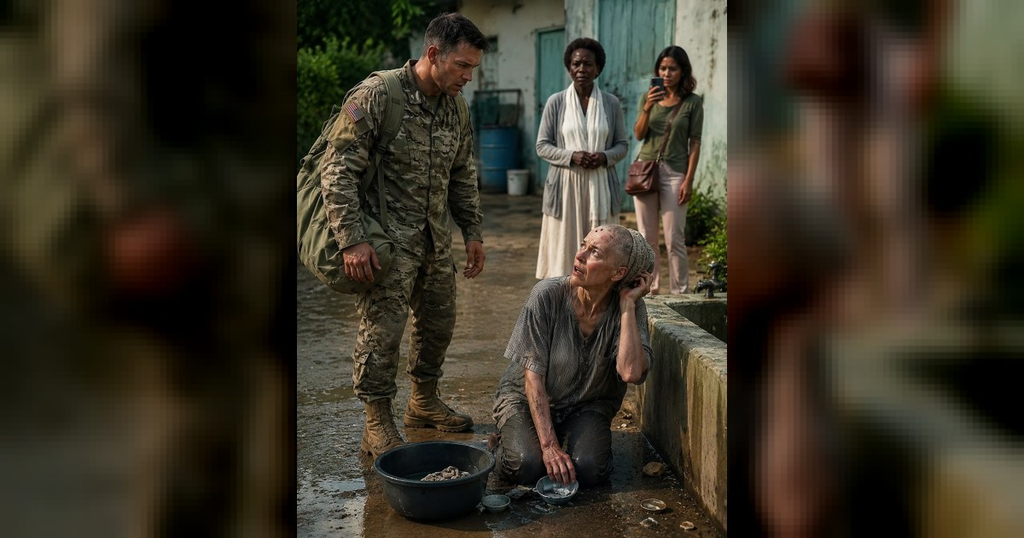
The yellow cab pulled onto the fresh gray gravel of 142 Elm Lane at exactly two in the afternoon. My boots sank into the loose stone as I stepped out, the humid Georgia air instantly pressing against my chest like a wet wool blanket.
The driver kept the engine running, the air conditioner hum and the rattle of a loose plastic fan on his dashboard filling the quiet street. I reached into my pocket and pulled out two crisp twenty-dollar bills.
“Keep the change,” I said, handing the forty dollars through the window.
The driver nodded, took the bills, and backed out onto the main road. The tires threw up a small cloud of white dust that smelled of lime and dry dirt.
I stood in the driveway and stared at the house. It was a brand-new two-story colonial with pristine white siding, black shutters, and a front porch that still smelled of fresh paint and wood sealer.
It was not the small brick rental cottage Gwen and I had agreed on in our letters before my deployment.
I reached into my pocket and pulled out my brass army lockbox key, sliding my thumb over its cold, notched edge. I walked up the three concrete steps to the front door, expecting the lock to yield to the key I had carried through four years of service.
I slid the brass key into the keyhole, but it stopped halfway. I tried to force it, but the internal tumblers remained completely rigid.
The lock was entirely new, and my key did not fit the front door of the house my money had built.
I rubbed the bare patch of skin on my collarbone where my dog tags used to rest, the metal gone but the habit remaining.
A loud shriek broke the afternoon quiet from the side of the yard.
My younger sister, Paige, was walking down the paved portion of the driveway toward a massive, brand-new black truck. She was wearing a sleeveless cream top, designer sunglasses, and carried a large leather purse that caught the bright summer sun.
“David!” she cried, dropping her phone into her purse as she ran toward me.
She reached out to hug me, her French-manicured nails tapping a sharp, plastic rhythm against the leather strap of her bag. Her perfume was thick and sweet, smelling of artificial vanilla.
“You were not supposed to be home until Friday,” she said, pulling back to look at my uniform.
“The flight got moved up,” I said. “Where is Gwen?”
Paige stopped her hands mid-air, her smile tightening at the corners as she looked toward the house.
“Oh, she is around,” Paige said, shifting her weight from one foot to the other. “She has been keeping to herself mostly.”
“Why is there a new truck in the driveway?” I asked, pointing to the shiny black tailgate.
“Mama needed something reliable for the grocery store,” Paige said, her fingers instantly finding her phone inside her purse again. “The old sedan was falling apart.”
“I sent home ninety-eight thousand dollars over four years,” I said, my voice measured. “We had a budget for a rental.”
“You should ask Mama about the money details,” Paige said, her thumb tapping the screen of her phone with three quick clicks. “She handled all the wire transfers.”
“Where is she?” I asked.
“In the backyard,” Paige said, already turning back toward the new truck. “She is fixing the garden.”
I walked around the side of the garage, my boots kicking up small pieces of loose gravel against the foundation. The green grass of the lawn was thick and newly sodded, showing dark seams where the rolls met.
Near the outdoor spigot, my mother, Margaret, was standing with a green garden hose in her hand, watering a row of young hydrangeas. She was wearing a light blue silk blouse and a heavy gold ring on her middle finger, which she twisted constantly.
“David, my goodness,” Margaret said, dropping the hose onto the damp grass where the water began to pool.
She rushed over and threw her arms around my neck, her grip surprisingly tight for a woman of fifty-four. The silk of her sleeve felt cool and expensive against my neck.
“You look so thin, David,” she said, pulling back to look at my face while her fingers gripped my shoulders. “They did not feed you well over there.”
“I am the same weight I was when I deployed,” I said. “Where is my wife, Margaret?”
My mother adjusted the heavy gold ring on her middle finger, her high, pleasant social tone dropping slightly.
“Gwen has been having a difficult time adjusting, David,” she said, looking past my shoulder toward the driveway. “We tried to make her comfortable.”
“Adjusting to what?” I asked. “The letters stopped coming three months ago.”
“The mail in this county is terrible,” Margaret said, her voice turning sharp as she smoothed her silk blouse. “And building this house took more of my time than I expected.”
“The money was for our future, Margaret,” I said. “Not a colonial house on Elm Lane.”
“I did not want to ruin your homecoming, David,” my mother said, her eyes fixed on the damp grass near her shoes.
“Is she inside?” I asked, turning toward the back door of the house.
“She is behind the garage,” Margaret said, her voice dropping to a dry whisper. “Just do not expect her to be the same.”
I walked past the concrete corner of the garage, the shadow of the building offering a brief relief from the blinding July sun.
Gwen was kneeling on the red Georgia dirt next to a low plastic wash basin filled with soapy water. She was wearing an oversized gray shirt that looked like an old rag, and her shoulders were hunched forward.
Despite the ninety-degree heat, a heavy blue knit winter cap was pulled down tightly over her ears and forehead.
“Gwen,” I said.
She jumped, her shoulders jerking upward as a chipped white porcelain saucer slipped from her wet hands and cracked against the hard dirt.
She did not stand up immediately, but instead reached up with one wet hand to pull her collar up, trying to cover her neck.
She looked up at me with pale, hollow cheeks, her eyes appearing far too large for her face.
“David,” she whispered, her voice dry and soft like paper sliding across a table.
Margaret walked up behind me, her gold jewelry clinking together as she folded her arms over her silk blouse.
“She insists on doing the dishes out here, David,” Margaret said, her voice rising to its pleasant social register. “We have a brand-new kitchen inside, but she refuses to use it.”
Gwen looked down at the broken pieces of the saucer in the dirt, her fingers twitching near her knees.
I stepped closer, my boots crunching on the dry grass, and reached out toward her face.
“Gwen, why are you wearing a winter hat?” I asked.
She shrank back slightly, her hand still clutching the fabric of her collar as she looked down at the dry Georgia dirt.
I did not ask her to take the cap off right then. Instead, I let Margaret pull me toward the house, the gravel crunching under our boots as the afternoon heat settled over the yard.
The kitchen smelled of fresh oil paint and joint compound. Bright granite countertops stretched along the far wall, flanked by custom oak cabinets that still had the yellow manufacturer stickers in the corners. The stainless steel refrigerator hummed in the corner, its surface polished to a mirror finish.
Paige sat at the breakfast bar, tapping her French-manicured nails on her phone screen. She did not look up when the screen door clicked shut, but she slid her feet off the bottom rung of the high stool.
“It cost forty-two thousand dollars just for the cabinetry,” Paige said, her voice sharp and fast. “They had to haul the timber all the way from North Carolina to get that specific grain.”
I looked at the seamless wood doors and the brass fixtures. “That is a lot of money for a kitchen, Paige.”
“You want things done right, you pay for them,” she said, her thumb flicking across the glass of her phone.
Margaret smoothed the front of her silk blouse and reached for the copper kettle on the stove. “We wanted a clean, modern place where the whole family could gather, David. You deserve to come home to something nice after four years of hard service.”
She set a heavy mug in front of me, then reached into the back of the cupboard for a saucer. The plate she chose was a cracked white porcelain saucer with a chipped blue rim.
The crack ran straight through the center of the floral pattern, dark with years of old kitchen grease. It looked completely out of place against the gleaming granite and the new ceramic mugs.
“Where did this cup set come from?” I asked, touching the rough edge of the chip with my thumb.
“Just an old piece we kept from the cabin,” Margaret said, pouring the tea. “The rest of the good China is still packed away in the basement boxes.”
She twisted the heavy gold ring on her middle finger, the metal clicking against the ceramic mug as she set it down.
“Gwen has her own dishes downstairs,” Paige said, her eyes still fixed on her screen. “She doesn’t like using the new stuff we bought.”
I set my hands flat on the cool stone counter, the polished surface feeling like ice under my palms. “Why is she working in the yard in this heat?”
Margaret sat down opposite me and took a slow sip from her own cup. Her voice was high and pleasant, the exact tone she used for church fundraisers and neighborhood committee meetings.
“Your wife has been very distant lately, David,” she said, setting her mug down precisely on the wooden coaster.
I looked toward the hallway, half expecting Gwen to walk through the door, but the house remained completely silent.
“She doesn’t eat with us,” Paige added, her nails tapping a rapid rhythm on the glass of her phone. “She says the smell of our kitchen makes her sick. We try to make nice dinners, but she just locks herself away.”
“She looks like she is starving,” I said.
Paige shrugged her shoulders. “She does it to get attention.”
I stood up from the barstool, the metal legs scraping loud against the new hardwood floor. “I am going to bring her inside. She looks like she is about to fall over.”
“Let her rest,” Margaret said, her hand reaching out to touch my wrist. Her fingers were warm and smelled of expensive lavender soap. “She is very sensitive about her appearance right now, David. She doesn’t want you seeing her like this.”I paused in the doorway of the kitchen, looking back at the two of them under the bright halogen lights.
“What is wrong with her appearance?” I asked.
Margaret did not answer. She picked up the cracked saucer, carried it to the sink, and turned on the brass faucet, letting the water run hot over the porcelain.
“Go wash your face, David,” she said over the sound of the running water. “You have the dust of the highway on you.”
The water ran hot and loud, filling the kitchen with steam that smelled of copper pipes and fresh grout.
I walked out into the central hallway, the silence of the house feeling heavier than the July humidity outside.
At five o’clock, I found my mother waiting near the guest bathroom upstairs. She was holding a stack of fluffy white towels that looked like they belonged in a resort.
“She did this to herself, David, just to make us look bad,” Margaret whispered, her eyes darting toward the stairs.
I stopped three feet from her on the plush carpet. “What did she do?”“She became obsessed with those internet diets,” Margaret said, her voice dropping to a dry, confidential hiss. “She stopped eating anything but broth, and then she bought some cheap chemical hair dye from the grocery store.”
She shook her head, her heavy gold earrings clicking against her collar.
“It burned her scalp,” Margaret said. “It all came out in clumps. We tried to help her, we really did, but she refused to let us call the county doctor. She said she didn’t want anyone looking at her.”
“Gwen has always had thick hair,” I said. “She never cared about diets before I left.”
“Well, she does now,” Margaret said, her face hardening as she leaned closer. “She is stubborn, David. You know how she gets when she thinks she is right.”
“And the weight loss?” I asked.
“She wants to look like those girls in the magazines Paige buys,” Margaret said.
She pushed past me to put the towels in the linen closet, the wooden door clicking shut behind her with a solid, expensive thud.
I stood in the narrow hallway, staring at the brass handle of the bathroom door, the air around me smelling of fresh cedar and plaster.I went downstairs and walked out to the gravel driveway. Paige was leaning against the fender of the brand-new black truck, her designer purse slung over her arm.
“Is this yours?” I asked, pointing to the heavy chrome grill.
“Mama helped me get the paperwork sorted last week,” Paige said, tapping her nails against the polished black metal. “It has the extended cab and the leather interior.”
“How much did it cost?” I asked.
“Fifty-five thousand,” Paige said. “But it has a great safety rating.”
She looked toward the back garden where the green hose lay coiled on the dry grass like a dead snake.
“You saw her, didn’t you?” Paige asked, a small smile appearing on her face.
“I saw her,” I said.
Paige let out a short laugh, shaking her head. “She is just trying to get attention with her new bald look. She thinks if she looks pitiful enough, you won’t ask where all the house money went.”
“She is thin, Paige,” I said. “She looks like she hasn’t eaten in a month.”“That is her choice,” Paige said, her eyes shifting to the road. “We offer her food every single night. She just stares at the floor and walks away.”
She opened the driver-side door of the truck, the interior smelling of rich leather and new carpet.
“She wants you to feel sorry for her,” Paige said before she climbed inside the high cab. “Don’t let her ruin your first night back.”
The engine started with a quiet, powerful rumble, and she backed out onto Elm Lane, leaving a thin cloud of dust in the hot air.
I walked around the side of the house to the back porch steps. The sun was low now, casting long, dark shadows across the red Georgia clay.
Gwen was sitting on the bottom step, her knees pulled up to her chest. She still wore the heavy knit cap, the dark wool absorbing the heat of the summer evening.
I sat down beside her, the old pine wood of the steps groaning under my weight.
She did not look at me, but her shoulder leaned slightly into mine, her body feeling light and fragile, almost hollow.“Gwen,” I said.
She pulled her collar up higher, her hand shaking as she gripped the faded denim of her jacket.
“Are you hungry?” I asked.
She shook her head twice, very slowly.
I reached out, my fingers brushing the rough edge of the dark wool cap.
“Let me see,” I said.
She did not move to stop me. She only closed her eyes and let her chin drop toward her chest.
I gripped the edge of the knit cap and slowly pulled it backward off her head.
The hair was gone, every single strand of it shaved completely bare to the white skin.
Across the surface of her scalp, small red cuts and faint purple bruises marked the skin like a map of some hidden struggle.
The cuts were straight, narrow lines, as if someone had used a razor without any soap or water.
“Gwen,” I whispered.
“Did you do this?” I asked.
She did not speak. She only pulled her shoulders in tighter, her eyes fixed on a dead leaf near her shoe.
I looked at the straight lines of the cuts, too even to be accidental, too clean to be from a chemical burn.“Talk to me,” I said.
She did not answer, her eyes still locked on the dry dirt between her shoes.
I touched the small red cuts on Gwen’s bare scalp, my fingers trembling in the warm breeze.
I walked into the living room at nine the next morning. The sun came through the tall front windows, lighting up the dust motes dancing over the new floral sofa.
Margaret sat with her feet up, a heavy wool blanket draped over her lap despite the morning heat. She was twisting the heavy gold ring on her middle finger, her eyes fixed on a morning talk show on the television screen.
On the side table sat a cracked white porcelain saucer with a mug of black coffee, the dark ring of an old stain visible near the rim.
“Mother,” I said, standing near the doorway. “Where is the ledger for my savings account?”
She did not look up immediately. She waited for the television commercial to start before she turned her head, her face smoothing into that high, pleasant social smile she kept for the neighbors.
“Good morning, David,” she said. “Did you sleep well? I told the delivery men we needed the best mattress in the store for you.”
“The ledger, Mother,” I said again, keeping my voice flat. “I need to see the bank records today.”
She picked up her knitting needles from the cushion beside her, the metal clicking together in the quiet room.
“The bank is closed for auditing this week, David,” she said, her needles starting to move. “Some routine regulatory check on all the county accounts. They said no one can access the paper files until the first of next month.”
“Oakhaven Savings does not close for a whole week for an audit,” I said. “They are open every weekday.”
She did not look up from her knitting, her fingers moving with a practiced, steady rhythm.
“Well, things have changed since you went overseas,” she said, her voice sharpening just a fraction. “They have new management now.”
“The records are private, even for family, until the end of the month,” she added, her pleasant tone returning as she patted her hair. “There is no use worrying about numbers the day after you get home.”“I sent twenty-five hundred dollars every month for four years,” I said. “That was my military pay.”
“And it is completely safe in the vault, right where you left it,” Margaret said, her voice tightening slightly at the edges. “I managed those wire transfers exactly as we agreed.”
“Go sit outside with Gwen,” she said, her needles clicking louder. “She has been moping in the yard all morning.”
I did not go to the kitchen, and I did not answer her. I walked out the back door, past the small garden where Gwen was kneeling by her wash basin, and walked toward the main road.
I walked past the garage where Gwen’s plastic wash basin sat empty on the gravel. The heavy knit cap she had worn in the heat was nowhere to be seen, but the memory of her shaved head and the small red cuts on her scalp kept my hands clenched inside my pockets.
I walked past the new black truck, its shiny paint catching the morning light, and headed down to the main road.The county transit bus cost four dollars and fifty cents. I counted out the coins from the small canvas pouch I had carried since my first deployment, placing them one by one into the driver’s metal box.
The driver did not say a word, just closed the doors with a loud hiss of air brakes and pulled onto the highway.
The bus dropped me three blocks from the town square. The walk to the Oakhaven bank was hot, the August humidity sticking to my shirt before I even reached the glass double doors.
Inside, the lobby was cool and quiet, smelling of cold air conditioning and old paper.
A small white plastic fan rattled on a shelf behind the counter, turning side to side and blowing a warm draft of air over the desks.
Clara, a girl I had gone to school with years ago, sat behind the third counter under a brass sign that said New Accounts.
Her eyes widened when she saw my shaved head, her gaze dropping quickly to my collar where my dog tags used to sit.“David,” she said, her voice soft and hesitant. “We heard you were back in town. Your mother said you were still in Europe.”
“I got in yesterday,” I said, placing my military identification card on the black rubber counter mat. “I need a copy of my savings ledger, Clara.”
I reached into my pocket and touched the crisp blue paper of my last military bank statement from June, which still showed the eighty-eight thousand dollars.
She took the card, her fingers tapping the keys of her computer terminal. The screen cast a pale blue light across her face as she scrolled through the files.
She stopped, her brow furrowing as she clicked a mouse button three times.
“Is something wrong?” I asked.
“David, when was the last time you checked this account?” she asked, her voice dropping to a low whisper as she looked over her shoulder toward the manager’s office.
“I checked it from Poland six months ago,” I said. “The balance was eighty-eight thousand dollars.”
Clara looked back at her screen, then up at me, her face pale.
“The system is showing a current balance of eighty-four dollars,” she said.
A man in a blue work shirt entered the lobby behind me, the bell above the door chiming once.
“Eighty-four dollars,” I repeated.
“I cannot print the full ledger from here without a supervisor’s key,” Clara said, her voice shaking slightly. “But I can see the transaction history.”
“There have been several large cash withdrawals over the last year,” she added.
“Who authorized them?” I asked.
“Let me get the physical signature cards from the back office,” she whispered. “Meet me in the parking lot by the big oak tree in ten minutes.”
She stood up, took my military card, and disappeared through the heavy oak door behind the teller line.
I walked out to the parking lot, the heat hitting me like a physical blow after the cool of the lobby.
I stood in the shade of the big oak tree at the edge of the asphalt. The noon sun was directly overhead, baking the hoods of the cars parked nearby.
Clara came out through the side exit, a white paper envelope tucked under her arm. She walked quickly, her heels clicking on the hot pavement.
“I could only copy the transaction slip from the last twelve months,” she said, handing me the envelope. “The manager was on the phone with the county office, so I had to be fast.”
I pulled the single sheet of paper from the envelope. It was a printed ledger sheet with a row of dates and figures.
“Twelve withdrawals,” I said, reading the numbers. “Eight thousand dollars each time.”
“They were all cash withdrawals, David,” Clara said, her voice strained. “The teller who processed them said your wife came to the drive-up window every time.”
“Gwen does not have a driver’s license,” I said. “And she would never spend this kind of money.”
“She was in the passenger seat of that new black truck,” Clara said, looking down at her shoes. “Your mother was driving.”
“And your sister Paige was in the back seat,” she added.
“And Gwen signed for the cash?” I asked.
“The signature on the withdrawal slips says Gwen Henderson,” Clara said. “The bank teller did not question it because your mother told everyone Gwen was handling your affairs while you were deployed.”“They had a signed form,” Clara said, reaching into her pocket and pulling out a folded piece of paper. “I copied the authorization page for you.”
I took the paper, unfolding it to reveal the photocopied document.
“It has Gwen’s signature at the bottom, witnessed by your sister Paige,” Clara said.
I stared at the black ink of the signature. It looked like Gwen’s handwriting, but the curves of the letters were too sharp, too precise, as if someone had traced them slowly with a heavy hand.
“Thank you, Clara,” I said.
“I am sorry, David,” she said, turning back toward the building. “Everyone in town thought you bought that new house on Elm Lane for them.”
I walked back toward the house under the burning sun, the paper folded tight in my front pocket.
The kitchen was empty when I let myself in through the back door. The smell of fresh wood and granite countertops was thick in the warm air.
Paige was sitting at the kitchen island, a glass of sweet tea near her elbow.
She was writing quickly in a blue spiral notebook, her French-manicured nails tapping against the wire spiral as she turned a page.A stack of glossy fashion magazines lay open next to her, covering most of the counter space.
“Where is Gwen, Paige?” I asked, standing in the doorway.
Paige gasped, her chair scraping loudly against the tile floor as she jumped.
She quickly closed the blue spiral notebook and slid it under the stack of magazines, her hand resting flat on top of the pile to hold them down.
“She is downstairs resting,” Paige said, her voice fast and light. “She spends all day in her room now.”
“It is like she does not even want to be part of this family,” Paige added, her fingernails tapping a fast rhythm on the paper.
“I went to the bank,” I said.
Paige’s fingers tapped once on the top magazine cover. “Oh. Did you get your military account updated?”
“There is no money in it,” I said.
“Well, do not look at us,” Paige said, her voice rising as she turned her face toward the window. “Gwen spent every single dollar of that money on online shopping.”
“Box after box kept coming to the old house before we moved here,” she said, her voice getting louder.“What did she buy?” I asked.
“Designer clothes, makeup, things she did not need,” Paige said, her manicured nails tapping a fast rhythm on the paper. “She probably threw it all away or sold it.”
“She has been acting strange for six months, David,” Paige said. “She does not even speak to us.”
I walked over to the counter, my eyes on the corner of the blue spiral notebook sticking out from beneath the magazines.
“Who drove Gwen to the bank?” I asked.
“Nobody drove her,” Paige said quickly. “She must have taken the county bus or walked.”
“She was in the passenger seat of the black truck,” I said.
Paige stood up, her face turning red as she stepped back from the counter.
“The teller is lying,” she said. “People in this town love to make up stories about us because we have a nice house now.”
“If she wanted to help this family, she would not sit there like a ghost,” Paige said, her voice dropping to a harsh whisper.
She picked up her phone from the counter and walked out of the kitchen, her heels clicking on the hardwood floor of the hallway.I reached out and pulled the bank slip from my pocket and smoothed the paper against the granite counter.
The heavy silver serving spoon clinked against the edge of a new porcelain bowl.
My mother, Margaret, lifted a thick slice of rib roast onto a gold-rimmed plate and set it down in front of me with a tight, pleased smile.
She was wearing a cream-colored silk blouse that did not have a single wrinkle, her heavy gold ring catching the light from the new chandelier as she smoothed her napkin.
The roast was surrounded by small, perfectly glazed carrots, but the steam rising from the platter smelled heavy and greasy in the warm dining room.
“We have to nourish you now that you are home, David,” she said, her voice carrying that high, pleasant lilt she used for company.
She did not look at Gwen as she spoke, keeping her eyes fixed on my face instead.
At the far end of the long mahogany table, Gwen sat perfectly still, her hands hidden in her lap.
She had not touched her water glass, and her heavy knit collar was pulled so high it nearly touched her ears, hiding her neck from the bright light.Paige reached across the butter dish to grab the salt shaker, her French-manicured nails tapping against the glass.
“You missed the tour of the master suite, David,” Paige said, talking quickly as she took a bite of warm bread.
I looked down at my plate, the rich smell of the seasoned beef suddenly making my throat feel tight.
Eighty-four dollars and twelve cents was all that remained in the bank account that should have held my four years of overseas savings.
“Gwen,” I said, “are you not hungry?”
My wife did not raise her head, her gaze fixed on the polished wood of the table.
Her face was pale, and the dark circles under her eyes looked like bruises in the glow of the chandelier.
My mother cleared her throat, the gold ring twisting around her middle finger.
“If she wanted to help this family, she would not sit there like a ghost,” my mother said, her tone sharpening just enough for me to hear.
No one spoke for three full minutes, the only sound being the scrape of Paige’s fork against her plate.Gwen kept her hands clasped tightly under the edge of the tablecloth, her shoulders hunched forward as if she could make herself disappear.
“The house has five bedrooms, David, and three full baths with marble tile,” Paige said, her voice cutting through the quiet.
“We even have a double garage with a concrete driveway,” Paige added, her fork hovering in the air.
“We need to discuss the bank statements, Mother,” I said, keeping my voice level.
Margaret paused with her wine glass halfway to her lips, her eyes narrowing slightly.
“Not at the dinner table, David,” she said, setting the glass down with a soft click.
I watched her pick up her linen napkin and dab the corner of her mouth.
Her hand was steady, but she avoided looking at the empty chair next to mine.
At seven, Paige caught me in the narrow hallway near the stairs, where the smell of fresh plaster was still strong.
She leaned against the wall, her designer purse dangling from her elbow as she looked down at her fingernails.
“You should not look at Mother that way,” Paige said, her voice dropping to a sharp whisper.“She has worked very hard to make this place nice for your return,” Paige added.
“Where is the money, Paige?” I asked, keeping my arms crossed over my chest.
She let out a dry, short laugh and tapped her phone screen with her thumb.
“Ask your wife,” Paige said, looking directly into my eyes with a small, cold smile.
“Gwen does not have the bank statements,” I said.
“The teller said the withdrawals were made in cash over the last six weeks,” I added, stepping closer to her.
“Gwen has a computer,” Paige sneered, leaning closer.
“She spent every single dollar of your military pay on online shopping, buying clothes and junk she did not even need,” Paige said.
I stood in the dim light of the hallway, my back pressed against the cold drywall.
The air was cool from the new central air unit, but my skin felt hot.
“She did not buy any clothes,” I said, thinking of the faded, oversized cotton dress Gwen was wearing.
“She had them sent to a post office box in town so you wouldn’t find out,” Paige said.
“She has boxes of things hidden away where you can’t find them, David,” Paige said, her voice dripping with mock sympathy.
She turned on her heel and walked toward the living room, her high heels clicking loudly on the hardwood floor.
I remained in the hallway, listening to the television turn on in the next room.
At eight, I found Gwen sitting on the wooden bench in the backyard garden, her knees drawn up to her chest.
The Georgia humidity was heavy, but she still wore the thick grey knit cap pulled down to her brow, her fingers white from gripping her shins.
I sat on the opposite end of the bench, the damp wood creaking under my weight.
Her old canvas coat was draped over the back of the bench, the hem frayed and greyed by dirt from the garden.
“Gwen,” I said gently, “the bank teller showed me the slips.”
She did not move, her shoulders curved inward like a dried leaf.
A yellow moth fluttered around the porch light behind us, casting a small, erratic shadow across her lap.
“There were twelve cash withdrawals,” I said.“All of them had your signature on the bottom,” I added, watching her profile in the dim light.
“Tell me what happened to the eighty-four dollars,” I said, my voice cracking slightly in the dark.
Gwen kept her chin tucked against her collar, her eyes fixed on the damp Georgia red clay between her shoes.
She did not blink, her breathing so shallow I could barely see her chest rise.
“Did you spend it, Gwen?” I asked.
“Did you buy things from the stores online?” I asked, hoping she would look at me.
The silence between us stretched until it felt like a physical wall, thick and cold.
I reached out to touch her hand, but she pulled her arm away quickly and tucked it under her sleeve, her gaze remaining on the ground.
I picked up her canvas coat to fold it, and my fingers brushed against a small scrap of paper in the deep pocket.
I pulled it out, but it was too dark to read the print under the trees.
Gwen stood up without looking at me and walked slowly back toward the house, her feet dragging in the dry grass.
I slipped the paper into my front pocket and followed her inside, the yellow kitchen light spilling across the back porch.
The next morning at nine, I walked down the cracked asphalt of Main Street to the Oakhaven wig shop.
The bell above the door jingled as I pushed it open, the air inside smelling of synthetic hair and sweet perfume.
A woman with short grey hair looked up from a glass counter filled with wooden mannequin heads.
I held out the small, crumpled paper receipt I had found in Gwen’s coat pocket.
It was a receipt for a one hundred and fifty dollar cash transaction from three weeks ago.
“I need to know who brought this in,” I said.
The clerk took the slip, squinting at the handwritten initials at the bottom.
“That was my purchase,” she said, her voice soft and slow.
“We do not buy real hair very often down here, but hers was special,” the clerk added, setting her reading glasses on the counter.
“What did she look like?” I asked.
The clerk looked at me, her eyes softening as she leaned over the counter.“She was very thin,” the clerk said, resting her chin on her hand.
“Her hands were shaking so bad she could barely sign the voucher,” the clerk said.
I looked at the rows of artificial curls on the shelf behind her.
“Did she say why she was selling it?” I asked.
“She said she needed to pay for a bus ticket and some kind of doctor’s test,” the clerk said.
“She was very polite about it, but she was in a hurry,” the clerk added, her voice dropping to a whisper.
“How much did you pay her?” I asked, though the number was printed right on the slip.
“One hundred and fifty dollars,” the clerk said.
“I gave her the cash right out of the register,” the clerk added, pointing to the old metal drawer.
I took the receipt back from her fingers, the edges worn soft from being folded.
“She had beautiful brown hair,” the clerk added quietly.
“It was nearly two feet long,” she said, looking past me toward the street.
The plastic chairs in the county medical clinic waiting room were bolted to the floor in rows of four, right under a rattling ceiling fan that did nothing for the heavy, humid air.Three other people sat across from me, their heads down, the silence broken only by the squeak of a nurse’s rubber-soled shoes on the linoleum.
The walls were painted a dull, faded green that reminded me of the barracks in Fort Bragg, and a stack of old magazines lay torn on a low laminate table.
Behind the front counter, a clerk in green scrubs was typing on a loud plastic keyboard, the steady clatter matching the rhythmic thump of the fan.
Dr. Ronald Vance stood in the doorway of the inner office, holding a thin tan folder with Gwen’s name typed on the paper tab.
He was a tall man, forty-eight years old, with quiet gray eyes and a graying beard that looked trimmed with precision.
He pulled a small silk cloth from his breast pocket and began polishing his wire-rimmed glasses, his eyes squinting slightly without them.
“We had to pause her scheduling, Sergeant,” Dr. Vance said, his voice slow and clear.
“I was told she was coming here every Tuesday,” I said, my thumb tracing the empty skin on my collar bone where my dog tags used to sit.“She missed July third, July tenth, and the sixteenth,” he said, putting his glasses back on and tucking the silk cloth away. “The county billing office flagged the account for non-payment on the twelfth.”
I looked down at the floor, where the gray linoleum was worn through to the black backing in the spots where people waited.
“The balance due was four hundred and fifty dollars,” Dr. Vance said, his voice dropping slightly so the other patients could not hear.
“That is not a large sum,” I said.
“To some, it is insurmountable,” he replied, looking at me over the rims of his lenses.
I wanted to tell him about the hundred thousand dollars of my overseas military pay that was supposed to be in our joint savings account, but the words stayed stuck in my throat.
“She told me she was receiving her weekly treatments,” I said.
Dr. Vance looked down at the folder, then back up at me with a quiet, steady gaze.
“She came to the parking lot twice last week,” he said. “She sat in her car for an hour, but she did not come inside.”
My hand went back to my collar, the skin there hot and dry.
“Why did she just sit in the parking lot?” I asked.
“She did not have the forty-five-dollar co-pay,” Dr. Vance said.
He turned back toward the narrow hallway that led to the examination rooms.
“Come into my office, Sergeant,” he said.
The private office smelled of old ledger paper and cold coffee, with a single high window looking out over the gravel lot.
A green shaded lamp sat on the corner of the desk, casting a low light over three thick medical directories.
Dr. Vance sat behind a gray metal desk stacked with medical journals, while I remained standing by the closed door.
“The county clinic operates on strict state guidelines,” he said, opening the thin folder. “I can only authorize charity care if we have the complete history.”
“I can pay the four hundred and fifty dollars today,” I said, reaching for my wallet.
“That clears the past visits, but it does not cover the specialist she needs next,” he said.
He tapped a silver pen against his desk blotter, three soft clicks in the quiet room.“The specialist in Savannah requires the original medical intake form before he will even schedule her,” Dr. Vance said.
“Where is that form?” I asked.
“She filled it out at the main county office three months ago,” he said. “But their database crashed last week, and the only other copy is the patient carbon she brought home.”
I thought of our new house on Elm Lane, and how my mother kept every piece of paper locked away.
“What is the exact medical diagnosis written on that form?” I asked.
“I cannot release the specific pathology report without her written consent, or without that original intake form to verify her signature,” Dr. Vance said.
“She is my wife,” I said.
“I know, Sergeant,” he said, his voice softening. “But the regulations are rigid, and she is running out of time.”
He leaned forward, his hands flat on the desk.
“She needs help, Sergeant, and she needs it before the month ends,” he said.
The deadline hung in the quiet office like heavy smoke.
“If I find that intake form, will you call the specialist yourself?” I asked.“The moment you put it in my hand,” Dr. Vance said.
He closed the folder and wrote a phone number on a small scrap of blue paper.
“Get the form from her papers at home, and do not let your family handle it,” he said.
I took the paper, noting the prefix was for the oncology clinic in Savannah.
“How did my mother get involved in her billing?” I asked.
“She called our office manager in June,” Dr. Vance said. “She told us Gwen was no longer a resident at your address.”
I folded the paper and put it in my front pocket.
“Thank you, Doctor,” I said.
“Do not wait, David,” he said.
The heat in the parking lot was thick, rising in shimmering waves off the white gravel.
A man in a short-sleeved blue shirt was standing near my old sedan, holding a wooden clipboard and looking up at the brick facade of the clinic.
“Are you David?” he asked as I approached.
“I am,” I said.
“I am Miller,” he said, offering a dry, calloused hand. “The county real estate office told me I could find you here.”I shook his hand, my mind still on the intake form I needed to locate.
“You called about the appraisal on Elm Lane,” Miller said.
“I did,” I said. “I need to know the market value of the structure and the lot.”
Miller flipped a page on his clipboard, his thumb sliding down a column of printed numbers.
“I did the drive-by inspection this morning at ten,” he said. “The finishes are high-end, and the square footage is just under three thousand.”
He looked at me, squinting against the bright Georgia sun.
“The new school district expansion pushed the values up last spring,” Miller said. “The land alone in this subdivision is worth forty thousand.”
“And the house itself?” I asked.
“In this market, that property will bring at least three hundred thousand dollars,” Miller said.
The number felt massive, a heavy weight that suddenly shifted the ground beneath my boots.
“Are you sure about that figure?” I asked.
“Houses in that subdivision are selling within ten days,” Miller said. “If you list it next week, you will have three cash offers by Friday.”He pulled a clean white business card from his shirt pocket and handed it to me.
“If you decide to sell, I have two clients who are looking for that exact floor plan,” he said.
I stared at the black lettering on the card, which read Miller and Associates, Valuations.
“Does the deed require both signatures for a sale?” I asked.
“It requires the owner of record,” Miller said. “Right now, that is Margaret.”
I looked back toward the clinic entrance, thinking of Gwen sitting in the hot sun because she did not have forty-five dollars for a co-pay.
“Thank you, Mr. Miller,” I said.
“Let me know by Monday,” he said, walking toward his station wagon. “The market will not stay this hot forever.”
The new black truck in the driveway of 142 Elm Lane was spotless, its chrome wheels reflecting the midday light.
Paige was standing by the driver’s side door, holding a cold bottle of soda and tapping her French-manicured nails against the glass.
“You should see the leather seats inside, David,” she said as I walked up the gravel path. “They have the cooling fans built right into the cushions.”“It is a nice vehicle, Paige,” I said, keeping my voice level.
“Mother says we might get the matching SUV next month if the finances clear,” she said, taking a sip of her drink.
She leaned against the side panel, her designer purse swinging from her shoulder.
“Where is Gwen?” I asked.
“In her room, I guess,” Paige said, turning her attention back to her phone screen. “She does not come out much during the day.”
I walked around to the front of the truck, pretending to admire the grill while I looked down at the base of the windshield.
The silver plate with the vehicle identification number was clearly visible through the glass.
I memorized the last six digits, repeating them in my head like a coordinate on a map.
“Did Mother buy this from the dealer in town?” I asked.
“Of course,” Paige said. “She paid cash, too. The salesman almost lost his mind when she pulled the envelope out of her bag.”
“She bought it at the dealership over in Screven County,” Paige said, dangling a heavy set of keys with a silver fob.“That is a lot of cash to carry,” I said.
“Well, we have the money now, don’t we?” Paige said, looking at me with a quick, sharp grin.
She tapped her foot on the running board, the metal making a clean, solid sound.
“I need to go inside and check on some paperwork,” I said.
“Don’t go messing up the office,” Paige said. “Mother has everything organized for the bank meeting tomorrow.”
I did not answer her.
I reached into my pocket and felt the corner of Miller’s business card, the sharp edge pressing against my thumb.
The value of the house was three hundred thousand dollars.
The truck in front of me was worth at least forty thousand.
My military savings account had eighty-four dollars left in it.
I walked past Paige and toward the front steps, my boots making no sound on the new pine treads.
I slipped the appraiser’s card into my pocket, my mind calculating the value of the property.
I walked back through the front door, the heavy oak frame swollen from the Georgia humidity. The air inside the house was cold and dry, smelling of brand-new carpet and the faint chemical scent of fresh wall paint.Margaret sat on the cream-colored sofa in the center of the living room, her fingers slowly turning the heavy gold ring on her middle finger. Paige sat next to her, her eyes fixed on her phone screen while her French-manicured nails tapped out a rapid, empty rhythm against the glass.
“There you are,” Margaret said, her voice rising in that high, pleasant social tone she used when she wanted to pretend everything was perfect. “We were just talking about what to make for dinner.”
“I am not very hungry,” I said, staying near the entryway.
“Nonsense,” Margaret said, smoothing her silk blouse over her knees. “I am going to make your favorite chicken and dumplings tonight, David, just like we used to do on Sundays.”
I looked at the high ceilings and the heavy velvet drapes hanging from the brass rods in the window. “These drapes look expensive.”
“They were on clearance at the outlet in Macon,” Margaret said quickly, her hand moving to her throat. “Everything in here was bought with a discount, David, you know how good I am with a budget.”“And we need to get Gwen looked at by a doctor,” I said.
Margaret smiled, though her eyes stayed completely still and pale under the living room lamps. “Of course we do, David. I know a wonderful Christian doctor over in Augusta who specializes in these kinds of delicate female troubles.”
“Augusta is seventy miles away,” I said.
“Well, the county clinic here is so crowded with people who cannot pay,” Paige said, not looking up from her screen. “You do not want Gwen sitting in those dirty waiting rooms with the welfare cases.”
“She needs to see someone close,” I said.
“We will get her sorted out, David,” Margaret said, her gold ring catching the light as she twisted it again. “You do not have to worry about a thing.”
“I want to see her room,” I said.
Margaret stood up quickly, her smile widening as she smoothed her apron. “Let me get the chicken started first, and then we can talk about all of that.”
By five o’clock, the smell of celery and boiled chicken began to fill the kitchen, but the air remained thick and heavy between us.Margaret stood by the double sink, washing celery stalks and laying them out on a clean dish towel. I stood near the refrigerator, watching the way her eyes avoided the small brass key hook on the wall where the old house keys used to hang.
“She is just resting right now,” Margaret said, turning off the tap with a sharp twist of her wrist. “She had a very long morning.”
“Where is she resting?” I asked.
“We only wanted her downstairs so she could rest without the noise, David,” Margaret said, wiping her hands on a dish towel.
She reached into her apron pocket and pulled out a small, glossy piece of paper. She pressed it into my hand, her palm dry and warm against mine.
“What is this?” I asked, looking down at the blue and white paper.
“It is a guide from the health food store on Broad Street,” Margaret said. “The lady behind the counter said these symptoms are very common for girls who do not eat enough red meat.”
I turned the pamphlet over in the kitchen light. It was a tri-fold advertisement for iron supplements and herbal teas, with a hand-drawn circle in red ink around a section titled tired blood.“The doctor in Augusta will tell you the same thing,” Margaret said, her voice dropping to a low, conspiratorial whisper. “She has a mild vitamin deficiency, David. That is all it is.”
“A vitamin deficiency does not make a woman’s hair fall out,” I said.
Margaret turned back to the sink, her shoulders tightening under her silk blouse. “You do not know what she was doing to herself while you were gone.”
“She was writing to me,” I said.
“She was hiding things from you,” Margaret said, her voice turning sharp as she picked up the carving knife. “She did not want you to know how she was letting herself go.”
“Why would she do that?” I asked.
“To make us look bad,” Margaret said, slicing through a celery stalk with a loud, wooden thud. “She has been like this for months, David.”
I looked at the brand-new stainless steel stove, the double-door refrigerator, and the granite countertops that caught the light from the window. “Did she help choose these counters?”
“Gwen did not care about the house,” Margaret said, her voice flat. “She spent most of her time in her own world, ignoring us when we tried to help her.”She threw the sliced celery into the boiling pot, the water splashing against the shiny metal side.
“We did everything we could for her, David,” she said.
At six, the sun was beginning to drop behind the pines, casting long, dark shadows across the back hallway.
Paige was standing by the linen closet near the utility room, holding a stack of fluffy white towels that still had the store tags attached to the seams. She stepped into my path as I tried to walk toward the rear porch, her designer purse swinging from her shoulder.
“You look so tired, David,” Paige said, throwing her arms around my neck in a sudden, tight hug.
I did not hug her back, keeping my arms straight at my sides. She smelled of expensive vanilla perfume and new leather, the scent of someone who had never spent a day worrying about the price of gas.
“We are so glad you are home,” Paige said, pulling back to look at my face with a bright, plastic smile. “We should all go on a family vacation to celebrate.”
“A vacation?” I asked.“To the coast,” Paige said, her voice quick and excited. “We could rent one of those big houses on St. Simons Island for two weeks.”
“That costs money,” I said.
“We have plenty of money now,” Paige said, tapping her French-manicured nails against my chest. “And you have your big military savings.”
I looked at the tags on the towels she was holding. They were thirty-eight dollars each, from the luxury boutique near the county square.
“We need to focus on Gwen’s health first,” I said.
Paige let out a small, dry laugh. “Gwen is fine, David. She just likes the attention.”
“She does not look fine,” I said.
“She does it on purpose,” Paige said, her voice dropping as she leaned closer. “She wants you to feel sorry for her so you won’t ask where the money went.”
“What money?” I asked.
“The money she spent,” Paige said, turning and walking into the guest bathroom, shutting the door behind her with a soft click.
I stood in the narrow hallway, the sound of the bathroom fan starting up with a low, metallic hum.The house felt like a theater set, every piece of furniture positioned to look comfortable, while the people inside walked on eggshells around each other.
The house grew completely quiet after ten, the only sound being the slow, rhythmic hum of the air conditioning unit outside the window.
I waited until I heard the heavy, steady breathing of my mother sleeping in her front bedroom downstairs. I slipped out of the guest room, carrying no light, my bare feet making no sound on the new oak floorboards.
The door to the basement stairs was at the very end of the kitchen hallway, tucked behind the pantry. I reached out and turned the brass knob, expecting it to turn freely, but it stopped with a solid, metallic thud.
The lock was engaged from the hallway side. I looked up at the top trim of the door frame, feeling along the dusty wood until my fingers brushed against a cold, flat brass key.
I slid the key into the lock and turned it slowly, holding the knob tight so the latch would not click against the plate. The door swung inward, revealing a flight of rough, unpainted wooden steps leading down into the dark.
The air rising from the basement was cold and wet, smelling of damp concrete and old water pipes.
I stepped down, counting twelve wooden risers before my feet touched the cold concrete floor of the cellar. A small plastic fan rattled in the distance, its blades buzzing like a trapped insect in the dark.
I walked toward the sound, my hand scraping against the rough foundation wall until I reached the wooden partition of the storage room. The door was secured with a heavy sliding bolt and a brass padlock.
I reached out and touched the padlock, the metal cold and solid in my palm. There was no key left in the lock, and the surrounding frame was bare.
Where is the key to the basement storage room kept?
I leaned my face against the rough pine planks of the door, peering through a wide crack in the wood where a knot had fallen out of the timber.
A single bulb hung from a yellow cord in the center of the small room, casting a gray light over stacks of cardboard boxes and old lawn chairs. In the corner, resting directly on the damp concrete, was a thin metal cot with a green army blanket pulled over it.Gwen lay on the cot, her body curved into a tight ball, her bare, shaved head resting on a flat canvas pillow. Her breath came in short, shallow puffs, her small frame shivering in the damp chill of the cellar.
I stood in the dark basement, looking at my wife asleep on a concrete floor.
I stepped down from the bottom wooden riser, my boots sinking slightly into the soft, damp layer of dust on the concrete. The smell of old wet newspaper and mildew was thick enough to taste, hanging in the stagnant air of the cellar.
I knelt beside the low army cot, the rusted metal frame creaking under my weight. Gwen did not wake right away, her breathing so light and thin that I had to place my palm near her shoulder just to feel the rise of her ribs.
When I touched her, she did not cry out. Her eyes simply flew open, dark and hollow in the dim gray light that filtered down from the floorboards above.
She immediately pulled the collar of her faded cotton shirt up toward her chin, her knuckles white as she squeezed the fabric.“David,” she whispered, her voice barely carrying past my ear. “You should not be down here.”
“I am not leaving you down here, Gwen,” I said, my voice steady but quiet. “Tell me what they did to you.”
She looked up toward the ceiling, listening for any sound of footsteps from the rooms above us, where my mother and sister slept in their air-conditioned bedrooms.
Slowly, her fingers let go of her collar. She began to unbutton the top of her shirt, her movements stiff and awkward, as if her shoulders were locked in place.
She pulled the fabric back from her left shoulder, revealing her collarbone in the pale light of the single bulb overhead.
A thick, puckered line of black surgical thread ran across her skin, surrounded by a wide circle of bruised purple and yellow. The skin was still raw, the edges of the incision swollen and angry.
“They took a piece of it last Tuesday,” she said, her dry whisper hitting my face like a cold draft. “The doctor at the county clinic needed to be sure.”
“Be sure of what?” I asked, my fingers stopping just short of touching the bruised skin.
“It is a tumor, David,” she said. “An adenocarcinoma. It is growing right under the bone.”
I stared at the black stitches, counting them in my head because my mind refused to process the word she had just spoken. There were nine stitches in total, each one tied with a small, precise knot.
“Why didn’t you write to me?” I asked, my thumb tracing the edge of her collar. “I had the military mail service. I could have been back in forty-eight hours.”
“Margaret told me you were in the middle of a promotion review,” she said, looking down at the concrete floor. “She said if you broke your contract to come home for a sick wife, they would court-martial you and take your pension.”
“That is a lie,” I said. “They grant emergency leave for family medical crises. She knew that.”
“I did not know,” Gwen said. “I had never been on a base, David. I only knew what she told me.”
She pulled her shirt back together, but her fingers were too weak to slide the plastic buttons back through the small holes. I took over for her, my thick fingers working the buttons one by one.“She told me we had no money,” Gwen said, her head dropping back onto the thin pillow. “She said the wire transfers you sent from overseas were frozen by the federal government because of some tax audit.”
“I sent eight thousand dollars every single month,” I said, my voice dropping to a harsh rasp. “It went directly into the joint account.”
“I asked her for three hundred dollars,” Gwen said. “Just three hundred for the specialist in Savannah who could read the scans. She told me the bank would not release a single cent.”
“She told you that while she was buying a brand-new truck,” I said.
Gwen did not look angry. She only looked tired, her eyes sinking back into the dark circles that ringed her face.
“I had to get to the clinic somehow,” she said, her hand reaching up to touch the rough knit of her cap.
“How did you pay for the bus to Savannah?” I asked.
“I had to sell it, David, there was no other way to pay for the bus to the clinic,” she said, her voice dropping even lower.“Your hair,” I said, the realization settling into my chest like a cold weight.
“The wig shop behind the old theater,” she said. “The woman there buys natural hair if it is long enough. She gave me one hundred and fifty dollars for it.”
I remembered the way her long brown hair used to feel against my chest when we slept, the smell of the herbal shampoo she used to buy at the grocery store.
“She had to shave it right there in the back room,” Gwen said. “Her clippers were old. They kept pulling at the roots, and my skin was already dry from the clinic medication she gave me.”
“Is that where the cuts came from?” I asked.
“My scalp was bleeding when I left,” she said. “Margaret made me wear the winter hat so the neighbors wouldn’t ask why I looked like a prisoner.”
“What about the rest of the three hundred?” I asked. “The bus ticket was only four dollars and fifty cents, but the clinic visit was more.”
“I sold my father’s silver pocket watch to the jeweler on Elm Street,” she said. “He gave me eighty dollars for the silver casing, even though the gears were rusted.”She reached out and took my hand, her fingers cold and dry against my skin.
“I did not want to lose the house, David,” she whispered. “Margaret said if we did not pay the contractor, they would take the deed and we would all be on the street.”
“The house is in Margaret’s name,” I said. “She used my money to build it, but she put her own name on the papers.”
Gwen closed her eyes, a single shuddering breath passing through her lips.
“I tried to find your army phone number,” she said. “I had it written on the back of our wedding certificate.”
“Where is the certificate now?” I asked.
“Paige took it,” she said. “She said she was organizing the files in the study, but I saw her burn it in the metal barrel in the backyard.”
I stood up, my boots pressing into the concrete as my chest tightened with a rage so hot it made my vision blur at the edges.
“I walked to the corner store to use the payphone,” Gwen said, her voice rising slightly in panic as she saw me stand. “I tried to call the operator to connect me to the fort.”“Did you get through?”
“Paige was waiting outside the booth,” she said. “She told the store manager I was having a nervous breakdown because of my illness. She told him not to let me use the phone anymore.”
“How did she know you were there?” I asked.
“She was monitoring my calls,” Gwen said. “She had a small device she plugged into the wall jack in the kitchen. Every time I lifted the receiver, it made a clicking sound.”
“And Margaret?”
“Margaret told me that if I embarrassed the family by calling the military police, she would have me committed to the state hospital in Milledgeville,” Gwen said. “She said she had the medical papers signed by a local doctor.”
I walked over to the basement door and rested my hand against the cold iron latch. The key to this door was probably in my mother’s bedroom, hidden in her jewelry box alongside my stolen savings.
“They locked me down here three weeks ago,” Gwen said, her voice trembling. “They said the dust upstairs was bad for my lungs, but they only wanted me where the appraisers wouldn’t see me when they came to value the house.”“The appraisers,” I repeated, my mind connecting the pieces of Miller’s business card in my pocket to the new truck in the driveway.
“They are selling the house, David,” she said. “Margaret wants to move to Savannah. She said she needs a place with a pool and a view of the water.”
“She is not selling this house,” I said.
“The clinic doctor said the tumor is growing,” Gwen said, her voice cracking as she reached for my hand again. “He said if we do not do the surgery by the end of the month, the chance of recovery drops to nothing.”
“How much does the hospital want?” I asked.
“Twelve thousand dollars,” she said. “They need the deposit before they will even reserve the operating room.”
Twelve thousand dollars was a sum I did not have, not with eighty-four dollars in my account and my mother holding the deed to the property.
I looked at the small high window, where the first faint gray light of dawn was beginning to show through the rusted bars.My mother and sister had taken my four years of deployment, my risk, my savings, and my wife’s health, and they had turned it into a two-story suburban monument to their own vanity.
They had left Gwen in the dark, starving and sick, while they planned their next purchase.
I walked back to the cot and sat down on the edge, pulling her fragile body into my lap. She felt as light as a bundle of dry twigs.
I held Gwen in the dark, my tears falling onto her bare scalp.
By seven the next morning, the smell of burnt lard filled the kitchen.
Margaret stood by the stove, turning cheap bacon with a fork. Paige sat at the counter, her French-manicured nails tapping a rapid rhythm against the glass of her phone screen.
I took my seat at the corner of the table, keeping my face smooth and blank. My shirt still smelled like the damp basement concrete, but I had scrubbed the salt of my tears from my cheeks before coming upstairs.
“You look tired, David,” Margaret said, not turning around.
“Just adjusting to the time difference,” I said.I reached for the glass pitcher of water on the counter, pouring myself a full cup to keep my hands occupied. My fingers wanted to wrap around something solid, but I kept my grip light and steady.
“I have some news from the transition office,” I said.
Paige did not look up from her screen, but her thumb stopped sliding across the glass.
“They completed the final audit on my overseas deployment division,” I said, setting the water glass down. “There is a lump-sum adjustment coming through for the hazardous duty payroll.”
Margaret turned slow, holding the greasy fork in mid-air. A drop of fat fell onto the linoleum, sizzled, and went gray.
“How much of an adjustment?” Margaret asked.
“Four hundred thousand dollars,” I said.
The kitchen went so quiet that the hum of the old yellow refrigerator sounded like a chainsaw. Paige dropped her phone onto the laminate counter, her eyes wide as she stared at my shoulder.
“Four hundred thousand?” Paige asked, her voice high and thin.
“In one single disbursement,” I said. “It should hit the county bank transfer system by the end of next week.”Margaret set the fork on the stove rim. She reached down to twist the heavy gold ring on her middle finger, her knuckles turning white under the pressure.
“The army actually pays that much for four years?” Margaret asked.
“They do when you stay in the red zones as long as I did,” I said.
I watched her face soften, the sharp lines around her mouth relaxing into a warm, familiar shape. It was the same look she used to give the department store windows in town when the autumn line arrived.
“We need to sit down and talk about this properly,” Margaret said, wiping her hands on a dish towel. “We need to plan.”
I followed her into the dining room an hour later, leaving Paige still staring at her phone in the kitchen.
Margaret sat at the head of the long oak table, her posture straight and proud. She did not offer me coffee, but she pushed the sugar bowl toward me with a gentle nudge of her hand.
“The house is lovely, David, but it is not quite finished,” Margaret said, pointing toward the back window. “The builder left the rear yard completely bare.”“It looks large enough,” I said.
“We can finally build the sunroom we always wanted with your new military pay,” Margaret said.
She leaned forward, her silk blouse whispering against the edge of the table. Her voice had the pleasant, social tone she reserved for the ladies at the garden club.
“We could put in those French doors that lead out to a paved terrace,” Margaret said. “And the kitchen cabinets are only grade-two pine. We really should have cherry.”
“The cherry would look nice,” I said.
I kept my voice flat, giving her just enough agreement to keep her talking. Every addition she named was another thousand dollars she believed was already hers.
“I can call the contractor this afternoon,” Margaret said. “He can start drawing up the plans for the extension on Monday.”
“Do that,” I said.
“He will want a deposit, of course,” Margaret said, her eyes tracking my hands. “Just ten percent to hold the crew.”
“Tell him he will have the full cash payment the moment the transfer clears next Friday,” I said.Margaret smiled, her teeth white and perfect against her lipstick. She reached out to pat my arm, her palm warm and dry on my sleeve.
“You always were a sensible boy, David,” Margaret said. “You know how to take care of this family.”
I stood up and walked out to the driveway to get some air.
The heat was already rising from the gravel, thick and smelling of wet Georgia clay. Gwen was sitting on the low wooden stool near the side of the garage, her head down, her knit cap pulled low over her ears.
Paige came out the front door three minutes later, letting the screen door slam behind her. She did not look at Gwen as she walked past the stool.
“David,” Paige said, stopping three feet from me. “We need to talk about the transportation situation.”
“What about it?” I asked.
“That black truck in the driveway is over two years old,” Paige said, tapping her fingers against her leather purse. “The air conditioning has a rattle in the dashboard that drives me crazy.”
Gwen shifted on her stool, her small shoulders rising and falling with a shallow breath. Paige did not turn her head toward her.“I saw the new King Ranch models at the dealership on the highway,” Paige said. “They have the heated leather seats and the upgraded suspension.”
“Those are expensive trucks, Paige,” I said.
“Not for someone with four hundred thousand dollars coming in,” Paige said.
She took a step closer, her perfume sweet and heavy in the morning heat.
“If we get the red one, we can trade the old one in and get a decent price,” Paige said. “I can go down there today and tell the salesman we are cash buyers.”
“Tell him we will be there on Saturday morning,” I said.
“Can we get the sunroof?” Paige asked.
“We can get whatever options you want,” I said.
Paige smiled, her thumbs tucking into her pockets. She looked over at Gwen then, her eyes cold and empty of any interest.
“She looks terrible, David,” Paige said, her voice dropping to a loud whisper. “You should make her stay inside when people are coming by.”
“She is just resting,” I said.
“Well, she looks like a scarecrow,” Paige said, turning back toward the house. “Do not forget about the truck on Saturday.”I waited until Paige went back inside before I walked down to the mailbox at the edge of the road.
A large white truck with the logo of a regional moving company pulled up to the curb at ten past ten. A man in a gray uniform got out, holding a clipboard and a yellow tape measure.
“Are you the owner?” the man asked, looking at the two-story house.
“I am the administrator,” I said, keeping my voice low. “We need a full-pack service for the entire contents.”
The man looked at his clipboard, then back at me.
“We have three bedrooms, a living room, and a basement storage area,” I said. “Everything goes into storage in the next county.”
“We can do that,” the man said. “When are you looking to schedule?”
“Next Thursday morning at six o’clock,” I said. “It needs to be completed before eight.”
The man made a quick note on his pad, the paper rustling in the hot breeze.
“That is a tight window for a whole house, sir,” the man said. “We will need three trucks and six men to move that fast.”“Write up the estimate for whatever it takes,” I said. “I will pay the premium for the speed.”
“I will need a deposit of five hundred dollars to hold that date,” the man said.
I reached into my pocket and pulled out five fifty-dollar bills, placing them directly into his hand.
“I will bring the rest in cash on Thursday morning,” I said. “Do not send any confirmation letters to this address.”
“Understood,” the man said, sliding the bills into his vest pocket. “We will see you Thursday at six.”
I watched him climb back into his truck and drive away, the gravel crunching under his tires.
Margaret was standing on the front porch when I turned back toward the house, her gold jewelry catching the glare of the mid-morning sun. She had a glass of sweet tea in her hand, her face bright with the expectation of forty-eight thousand dollars in cherry wood and glass.
I walked up the gravel path toward her.
“Was that the contractor, David?” Margaret asked, her voice light and hopeful.
“Just the surveyor checking the property lines for the sunroom,” I said.“Oh, wonderful,” Margaret said, her smile widening. “I knew you would make things right for us.”
David smiled at his mother while his fingers clench into fists behind his back.
I let go of the tension in my knuckles only when I turned my back on my mother and walked down the gravel driveway toward the road. The humid Georgia air hung thick over the ditches, smelling of red clay and dry grass. I did not look back at the brand-new black truck or the high brick facade of the house my money had built. My boots kicked up grey dust as I made my way toward the highway to catch the midday bus.
By one o’clock, I was sitting in the records room of the county medical clinic. The room was small, tucked behind the busy reception desk, and it smelled of old cardboard, floor wax, and the faint, sweet scent of Dr. Ronald Vance’s pipe tobacco. A single plastic fan rattled on top of a green filing cabinet, doing nothing to cool the sticky heat of the afternoon.
Dr. Vance took off his wire-rimmed glasses and polished them slowly with a small grey silk cloth. He looked at the medical intake form on the metal table between us, then at the blue military insurance card I had laid beside it. On the top page of the file, the diagnosis was written in clean black ink: malignant thoracic tumor, requiring immediate surgical resection.
“Your military coverage is active, Sergeant,” Dr. Vance said, his voice slow and clear. “But the county hospital has a strict protocol for out-of-network specialist surgeries. They require a primary guarantor signature before they will reserve the operating room for the end of the month.”
“I will sign it,” I said.
“It means if the insurance board denies the claim because of the prior gap in her treatment, the debt falls entirely on you,” he said. He put his glasses back on, adjusting the wire frames behind his ears. “The county welfare office refused the emergency waiver last Tuesday, and we are talking about thirty-two thousand dollars for the surgical suite alone.”
I took the black ballpoint pen from the desk. My hands were steady, my mind focusing on the tactical lines of the forms.
“My wife needs the surgery,” I said.
“She does,” Dr. Vance said, leaning forward and resting his elbows on the desk. “The biopsy showed the growth is aggressive. If we do not clear the margins by the end of the month, the options become very limited.”
I signed my name on the three blue financial responsibility forms. The paper was rough under my palm, and the ink dragged thick and black across the lines. I pressed hard enough to leave an impression on the wooden desk underneath, committing myself to a debt I had no legal way to pay with eighty-four dollars in my pocket.
Dr. Vance took the sheets, checked each of my signatures, and placed them into a yellow folder. He slid a copy of the clinic intake form across the table to me.
“I will call the chief of surgery myself,” he said. “But you must resolve the hospital deposit with the billing office by Tuesday morning.”
“It will be resolved,” I said.
I folded the paper, slipped it into my shirt pocket, and walked out into the heat.
The Oakhaven bank branch was cool, the air conditioning humming deep behind the wood-paneled walls. I walked past the teller counter where Clara was working and went straight to the frosted glass door of the manager’s office, knocking once before stepping inside.
Mr. Sterling, the bank manager, was a thin man with grey hair combed flat across his scalp. He looked up from his ledger as I entered, his eyes dropping to the faded green of my army surplus jacket and the brass key ring in my hand.
“Sergeant,” he said, indicating the leather chair across from him. “How can I help you today?”
“I need the copies of the twelve cash withdrawals from my savings account,” I said. “The ones made while I was deployed.”
Mr. Sterling clicked his tongue and tapped his manicured fingers on his desk. He opened a folder on his computer screen, his face turning pale as he scrolled through the file.
“Those transactions were authorized under a signed power of attorney,” he said. “Your mother brought the documents in herself, and they were notarized in town.”
“My wife never signed that power of attorney,” I said. “And she did not sign the withdrawal slips.”
He reached into a bottom drawer and pulled out a large manila envelope. He slid twelve white sheets across the desk, each one a copy of a withdrawal slip for sums ranging from five thousand to twelve thousand dollars.
I laid them out in rows on the dark wood of his desk. The signature on each slip read Gwen Miller, but the letters were shaky, tilting far to the right, with a strange loop on the double-e that Gwen never made in her life.
Mr. Sterling took a magnifying glass from his drawer and leaned over the papers. He compared them to the original signature card from when we opened the account five years ago.
“We have the signatures, Sergeant, and they do not match your wife’s hand,” Mr. Sterling said, his voice dropping to a whisper.
The silence in the office was heavy, broken only by the click of the wall clock. I could see the sweat beads forming near his temples.
“Will you reverse these charges as forgery?” I asked.
Mr. Sterling rubbed his temples and sighed.
“If we flag this as criminal fraud, the bank’s security division must notify the county sheriff immediately,” he said. “Your mother and sister would be arrested before nightfall.”
“I know,” I said.
“The bank will not credit the hundred thousand dollars back to your account until the police report is filed and the investigation is complete,” he said. “That could take months.”
“I do not have months,” I said. “But I need these copies.”
He picked up the sheets, stacked them neatly, and slid them into a clean white folder.
“Take them,” he said. “But if you do not file the report by the end of the week, I am legally obligated to report the discrepancy myself.”
I took the folder and walked out of the bank.
At four o’clock, the town library was empty except for an elderly librarian shelving books in the biography section. I found Miller, the real estate appraiser, sitting at an oak table near the back window.
Miller had a leather briefcase open on the table. He was a quiet man with grease under his fingernails and a faded blue pencil tucked behind his ear.“I finished the valuation on the Elm Lane property,” Miller said, handing me a thick white binder.
The cover page had a photograph of the newly constructed house, its red brick looking bright against the green of the pines.
“The structure is solid,” Miller said. “Three thousand square feet, brand-new plumbing, and the land itself is prime acreage. It is worth three hundred and five thousand dollars on the open market.”
“How fast can it sell?” I asked.
“In this market, a cash buyer would snap it up in forty-eight hours if we priced it at two hundred and eighty thousand,” Miller said. He looked at me closely. “But your mother’s name is on the preliminary deed, David. You cannot sell it without her signature.”
“She will sign it,” I said.
“If she does, I have a developer from Athens who has been looking for a lot in that subdivision,” Miller said. “He has the funds ready.”
“Keep him on the line,” I said.
I took the binder, tucked it under my arm, and walked back to the house on Elm Lane.The sun was down by the time I reached the driveway. The house was dark, save for the single light burning in my mother’s bedroom upstairs. I crept past the kitchen, where a half-eaten roast sat on the counter, and made my way down the basement stairs.
The air downstairs was cold and damp, smelling of wet concrete and old cardboard. Gwen was sitting on the edge of the cot, her thin shoulders hunched under a grey blanket.
I sat down on the concrete floor beside her, resting my back against the rough brick wall. I pulled the blue spiral notebook from my jacket pocket.
“Where did you find that?” she whispered.
“Paige’s room,” I said. “Under her fashion magazines.”
I opened the notebook to the first page. In my sister’s neat, looping handwriting, there was a list of dates, store names, and figures.
I laid the copies of the forged bank slips on the cot beside her.
“Look at the first date,” I said.
Gwen leaned forward, her bare scalp catching the yellow light of the single hanging bulb. She touched the first bank slip, dated July third, for eight thousand dollars.In the blue notebook, under July third, Paige had written: *Down payment for oak flooring, eight thousand dollars.*
“They tracked every cent of my savings,” I said. “They used it to build the house and buy the truck while they kept you down here.”
Gwen closed her eyes, her head dropping toward her knees.
“I did not want you to know, David,” she whispered. “I did not want you to lose your career because of me.”
“The career does not matter,” I said.
I turned the page of the blue notebook to the last entry, matching it to the final withdrawal slip for twelve thousand dollars. The dates and amounts aligned perfectly.
“We have the proof,” I said. “Mr. Sterling at the bank verified the forgery.”
Gwen looked at the white binder containing the house appraisal.
“What are you going to do?” she asked.
“I am going to take the house,” I said. “And you are going to have your surgery.”
She reached out, her thin, pale hand touching my arm.
“Your mother will never agree to this,” she said.
“She will not have a choice,” I said.I closed the blue spiral notebook, my face set like stone in the dim basement light.
At six o’clock the next evening, the dining room smelled of fresh plaster and lavender furniture polish.
Mr. Eldridge, the branch manager from the Oakhaven bank, sat at the head of the cherry wood table with his hands folded over his black leather briefcase. He had a quiet, professional demeanor, and he kept his wire-rimmed glasses perched on the edge of his nose as he watched us.
My mother, Margaret, walked in from the kitchen carrying a silver tray with four tea cups, her heels clicking on the new oak floor. She was wearing a cream-colored silk blouse, and she smiled with a high, pleasant social warmth that did not reach her eyes.
“We do not often have guests from the bank at this hour, Mr. Eldridge,” Margaret said, placing a cup in front of him. “If I had known, I would have prepared some proper refreshments.”
She set the cup down on a cracked white porcelain saucer, the thin gray fracture running through the painted blue flowers. It was the same cheap saucer we had used for years in the old trailer, a strange contrast to the expensive new kitchen.My sister Paige sat across from him, her fingers tapping her French-manicured nails against the glass of her phone screen. She was wearing a new designer silk scarf around her neck, which she had likely bought with my money.
“David said there was some trouble with his old savings account,” Paige said, not looking up from her screen. “I told him we don’t handle any of his military business.”
I rubbed the skin of my collarbone, where my dog tags used to rest before I gave them to Gwen.
“The trouble is not with the account,” I said, my voice quiet and measured. “The trouble is with the signatures on the withdrawal slips.”
I opened my manila folder and laid twelve photocopied bank slips flat on the table, lining them up with the edge of the polished cherry wood. Each slip showed a cash withdrawal of over eight thousand dollars, and each was dated during my third year overseas.
Mr. Eldridge reached into his breast pocket, pulled out his reading glasses, and leaned over the paper. He compared the copies to a signature card he had brought from the branch.
“These withdrawals cleared our Oakhaven branch over a period of ten months,” Mr. Eldridge said, his voice slow and clear. “The total amount taken from the account is ninety-nine thousand nine hundred and sixteen dollars.”
“My wife was supposed to be the only person with access to that account,” I said.
Margaret picked up her own cup, her middle finger twisting the heavy gold ring she always wore. She took a small sip of tea, her eyes fixed on the bank manager.
“Gwen was very sick, David, and she had many personal expenses we did not want to worry you with while you were deployed,” Margaret said. “She asked us to help her manage the money.”
“She was locked in the damp storage room in the basement, Mother,” I said.
The room went completely quiet except for the low hum of the refrigerator in the kitchen. Paige stopped tapping her phone screen, her hand freezing in mid-air.
Mr. Eldridge looked up from the signatures, his brow furrowing as he looked at my mother. He took off his glasses and cleaned them with a small cloth.“Mrs. Vance, did you present these slips to the teller yourself?” Mr. Eldridge asked.
“Of course not,” Margaret said, her voice rising slightly into her sharp, defensive tone. “Gwen went to the bank herself. She had my car whenever she needed it.”
I took the blue spiral notebook from my briefcase and placed it next to the bank slips, open to the page where the numbers had been recorded.
“This is Paige’s handwriting,” I said, pointing to the columns.
Paige stared at the blue cover, her face turning a pale shade of white under her makeup.
“That is just my school notebook,” Paige said quickly, reaching out to grab it.
I placed my hand over the notebook, holding it firmly against the table.
“You wrote down the exact dates of the withdrawals,” I said. “And next to them, you wrote the prices of your designer handbags, your clothing, and the down payment on the black truck parked in the driveway.”
“David, this is ridiculous,” Margaret said, her pleasant tone turning sharp. “You are embarrassing your sister in front of a stranger. We have done nothing but support your wife while you were gone.”
“Mr. Eldridge is not a stranger,” I said. “He is the man who is going to call the county sheriff.”
Mr. Eldridge laid the signature card beside the twelve slips, pointing to the signature line with a silver pen.
“These signatures are not Gwen Vance’s hand,” Mr. Eldridge said. “The loop on the letter G is entirely different, and the slant is reversed. It matches the handwriting in this blue notebook.”
“My wife has a tremor,” Margaret said. “Her handwriting changed when she became ill.”
“She does not,” I said.
I looked at my mother, whose face had gone pale beneath her makeup.
“The bank will have to report this to the regional auditor by nine tomorrow morning,” Mr. Eldridge said. He stood up, locking his briefcase with two loud clicks that sounded like gunshots in the quiet room.
“I will wait in my vehicle, Sergeant,” Mr. Eldridge said to me. “Let me know when you are ready for me to make the call to the county sheriff’s office.”
The front door closed behind him, the sound of the latch echoing through the quiet house.
It was six-thirty.
Margaret sat down slowly, her silk blouse rustling in the warm air. She looked at the cracked white saucer on the table.
“You have ruined our reputation in this neighborhood, David,” Margaret said. “What will the neighbors think when they see a bank vehicle parked in our driveway for so long?”
“You spent ninety-nine thousand dollars of my savings,” I said.
I pulled the small paper receipt from the Oakhaven wig shop out of my pocket and placed it on top of the cracked saucer.
“Gwen had to sell her hair to a wig maker for one hundred and fifty dollars,” I said, my voice steady but cold.
Margaret looked at the receipt, her hand remaining still on the table.
“She did that to make us look bad,” Margaret said. “She was always looking for a way to turn you against me, even before you left for the service.”
“She did it to pay for the bus to the oncology clinic because you refused to give her three hundred dollars for her specialist,” I said.
I then pulled out the official valuation report that Miller, the appraiser, had signed at the library.
“This house is worth three hundred and twenty thousand dollars,” I said, sliding the thick paper across the cherry wood.
“This is my house,” Margaret said. “My name is on the deed, and you cannot take it from me.”
“The deed was purchased with stolen military funds,” I said. “The bank manager has the proof of forgery. He is waiting to call the police.”
Paige suddenly let out a sharp sob, her face dropping into her hands. Her shoulders shook as she began to weep.
“I told you he would find out,” Paige cried, her voice muffled by her fingers. “You said the bank wouldn’t care because we were family and we lived in the same house.”
“Hush, Paige,” Margaret said.
“No,” Paige screamed, sitting up and looking at me. “She made me do it, David. She told me Gwen was going to die anyway, and the money would just go to waste if we didn’t use it to buy this place.”
“Paige, be quiet,” Margaret said, her voice cold and commanding.
“She kept the key to the basement,” Paige sobbed, her mascara running down her cheeks. “She wouldn’t let me give Gwen any of the real food. She said we had to keep her hidden so the neighbors wouldn’t ask questions about her hair.”
I looked at my sister, whose grief was only for herself and the life she was about to lose.
“You knew she was sick,” I said.
“Mother said it was just a phase,” Paige whispered. “She said we deserved a nice house after all those years we spent in the trailer down by the creek.”
“We worked for this,” Margaret said, her eyes turning back to me, hard and dry. “I raised you alone, David, while your father was gone. I deserved this house.”
“You did not deserve Gwen’s life,” I said.
It was seven o’clock.
The shadow of the pecan tree in the front yard stretched long across the dining room table, darkening the white saucers.
“Mr. Eldridge is still waiting in the driveway,” I said.
I took the prepared deed transfer document from my briefcase.
“You are going to sign this house over to Gwen,” I said.“I will not live in the street,” Margaret said.
“You can live where you like,” I said. “But you will not live here anymore.”
“I am your mother, David,” she said, her voice cracking slightly as she looked at the legal document.
“My wife is dying because of you,” I said.
I laid the black pen on the table next to the deed.
“You will sign this paper tonight, Margaret, or the bank manager will call the police,” I said.
Margaret looked at Paige, who was still weeping into her hands, then back at the appraiser’s report.
She reached for the pen, her fingers trembling so hard she dropped it once against the polished wood.
Margaret’s hand shakes as she presses the pen to the deed transfer document.
I pulled the legal document from my mother’s hand before the blue ink of her signature could even dry on the line.
The clock on the wall at the county hospital admission desk showed exactly eight the next morning when we arrived.
Gwen sat in the orange vinyl chair beside me, her heavy winter cap pulled down low over her bare scalp, her small hand resting inside my coat pocket for warmth.The woman behind the admission glass, a nurse named Martha with a silver name tag, looked over her gold-rimmed spectacles at the deed transfer document I pushed through the metal slot.
“This is the official deed to the property at one hundred and forty-two Elm Lane,” I said, my voice steady and quiet. “The appraiser Miller valued it at three hundred thousand dollars, and I am signing it over to the county health system as collateral for her immediate surgery.”
Martha picked up the thick paper, turning it over to inspect the county clerk’s blue stamp before she looked at Gwen’s pale face.
“The surgeon has been notified of the transfer,” she said, her finger tracing the signature line where my mother’s name was written. “We have an open slot in the operating room at nine o’clock.”
Gwen looked up at me, her dry lips parting slightly as she pulled her collar up toward her chin.
“David, are you sure about the house?” she whispered.
“The house does not matter,” I said, pressing my hand against her shoulder. “Nothing matters except getting that mass out of your chest.”A nurse in faded blue scrubs came through the double doors, pushing a high metal wheelchair with black rubber wheels.
Gwen stood up slowly, her oversized brown coat hanging loose off her narrow shoulders, and she did not look back as they rolled her through the gray doors.
I watched the doors swing shut until they stopped moving.
At one in the afternoon, the hospital waiting room was completely empty except for an old man sleeping near the payphone.
I sat in the corner by the vending machines and pulled the small green canvas bag from beneath my chair.
The brass army lockbox key was still on my main ring, its edges worn smooth from four years in my pocket during my service overseas.
I slid the key into the small lock, and the mechanism turned with a heavy, familiar click that echoed in the quiet corner of the room.
Inside the box lay the final court-certified deed transfer, stamped by the county clerk at nine-fifteen that morning to show the property was fully cleared of any liens.
Beside it sat the business card for Miller, the real estate appraiser, who had already spoken to a private buyer from Savannah.The buyer had agreed to a quick cash sale of two hundred and eighty thousand dollars, with the funds wired directly to the hospital’s escrow account.
I looked at the certified copy of the bank records I had placed at the bottom of the lockbox.
It was now clear that Margaret had forged Gwen’s signature on the power of attorney documents to authorize every single one of the twelve large cash withdrawals from my military savings.
I locked the brass box again and slid it back into the canvas bag.
At five o’clock, the door to the recovery room swung open and Dr. Ronald Vance walked out, his white coat unbuttoned.
He stopped in front of my chair, took off his wire-rimmed glasses, and polished them slowly with a small silk cloth he kept in his breast pocket.
“The surgery is finished, David, she is going to make a full recovery,” Dr. Vance said, his voice slow and clear in the empty corridor.
“Did you get all of it?” I asked, my fingers tightening around the canvas strap of my bag.“The tumor was fully removed, and the margins are completely clean,” he said, putting his glasses back on and adjusting them behind his ears. “She is in recovery now, breathing on her own.”
I rubbed the bare skin where my dog tags used to rest, feeling the small scar from my basic training days.
“Can I see her?”
“She is still groggy from the anesthesia,” Dr. Vance said, giving me a brief nod. “Go on in for five minutes, then let her rest.”
I walked into the small recovery cubicle, where Gwen lay under a white sheet, her face pale but her breathing even and deep.
I touched her fingers, which felt warmer than they had in weeks, and she gave a small, faint squeeze before her eyes closed again.
I walked down the back stairs and out into the humid air of the parking lot to clear the heat from my lungs.
The rain had stopped twenty minutes prior, leaving the black asphalt wet and steaming under the glare of the streetlights.
Margaret was sitting on the concrete retaining wall near the dumpster, her yellow silk blouse damp at the collar and her middle finger bare.
She did not have Paige’s new truck, and her heavy gold ring was nowhere to be seen.
“They told me at the Elm Lane house that you sold it to a buyer from Savannah,” Margaret said, her high social tone completely gone.
“The paperwork was finalized at noon,” I said.
“Where are we supposed to go, David?” she asked, her fingers twisting her empty middle finger. “Paige is staying at the motel on the highway, and they want eighty dollars a night.”
“The motel is where you belong,” I said, standing three feet away from her.
“You cannot leave your own family with nothing,” she said, her voice rising slightly. “I only used that power of attorney because we needed the down payment for the new place.”
“You forged Gwen’s signature twelve times to steal my military savings,” I said, my voice flat. “That is bank fraud, Margaret.”
“I did it for the family’s future,” she said, stepping toward me on the damp concrete. “Just give us ten thousand from the sale, just enough to get Paige a deposit on a rental.”
“The money is gone,” I said. “Every dollar went to the hospital to pay for the surgery you refused to fund.”
“We will be on the street by Monday,” she whispered.
“Then you had better start walking,” I said.
I turned my back on her and walked toward the entrance of the hospital.
I watched Margaret walk away down the wet asphalt of the hospital parking lot.
The road out of Oakhaven was gray asphalt that turned to red clay once we crossed the county line, leaving the hospital parking lot far behind us. The drive in the old blue station wagon took forty-five minutes, but we did not speak until the tires hit the gravel road of our new town.
The dust rose behind us in a long, quiet cloud that settled over the blackberry briars by the fence.
By ten o’clock, the high sun was already heating the tin roof of our rented cottage. Gwen sat in a low wicker chair on the front porch, her fingers wrapped around a blue ceramic mug of chamomile tea.
She wore a soft linen scarf over her head, tied at the back in a small, loose knot to cover her scalp where her hair was only beginning to return. The pale fabric made her face look small, but her eyes were clear, no longer shadowed by the dark of the basement storage room.
“The tea needs more sugar,” she said, her voice a dry whisper that carried across the wooden boards of the porch.
“I will get the jar from the kitchen box,” I said.
I did not move yet. My hand went to my throat, my fingers rubbing the flat, bare skin where my dog tags had lived for four years of service.
The silence in this yard was different from the silence at Elm Lane. Here, the only sound was the dry rattle of cicadas in the high oak trees.
“We have six boxes of kitchen things on the floor,” she said, looking toward the open front door where the screen was slightly torn at the corner.
“They can stay there until tomorrow,” I said.
She took a slow sip, her shoulders dropping an inch as she leaned back against the white-painted wood of the cottage. A yellow wasp hovered near the porch ceiling, then drifted away toward the old stone well house in the side yard.
“The lady down the road said the mail comes at noon,” she said.
“We do not have any mail to get,” I said.
“Not anymore,” she said.
She looked down at her lap, her fingers tracing the hem of her faded cotton skirt. I stood up and went to the edge of the steps, looking out over the patch of wild grass that ended at the ditch.
A rusty mailbox stood on a crooked cedar post by the road, its metal flag painted a faded orange that had peeled under the summer sun.
“I will fix that post before the ground gets dry,” I said.
Gwen set her mug down on the wooden floorboards, the ceramic making a soft clink against the pine.
“The wind is coming from the south,” she said.
“It will bring rain by evening,” I said.
“Let it rain,” she said.She pulled her collar up slightly, then stopped herself and let her hand fall back to her lap. The red marks on her neck from the basement cot had faded to pale pink lines that would soon disappear entirely.
“I still have the receipt from the clinic,” she said.
“The clinic is paid,” I said.
“I know,” she said.
She looked out toward the gravel road, her face quiet in the bright morning light. A yellow butterfly fluttered over the ditch, landing on a wild dandelion before rising again into the warm southern air.
At eleven o’clock, the heat began to rise from the red dirt, heavy and thick with the smell of wild onion and dry grass.
I carried three plastic pots of red geraniums from the back of the station wagon, my boots sinking slightly into the soft earth near the porch steps. The soil inside the pots was dark and dry, spilling over my fingers as I set them by the foundation.
Gwen came down the porch stairs slowly, holding the rail with both hands to keep her balance. She wore an old pair of my army trousers with the cuffs rolled up three times to keep them from dragging in the dirt.
“We should put them near the chimney,” she said.
She knelt on a folded burlap sack, her knees pressing into the soft earth. I handed her the small steel trowel I had bought at the hardware store in town.
“The ground is hard under the grass,” I said.
“It just needs the top broken,” she said.
She pushed the spade into the dirt, her wrist thin but steady as she cleared away the weeds.
“We have our own garden now, David.”
I sat on my heels beside her, digging my fingers into the cool soil to clear out the old roots and small white stones. The dirt was thick and smelled of old rain.
“Margaret called the bank again on Monday,” I said.
Gwen stopped her trowel, her hand resting on the wooden handle.
“What did they tell her?” she asked.
“They told her the account was closed,” I said.
“And the house?”
“The deed is with the new owner,” I said.
She nodded once, then went back to digging, her small shoulder blades moving under her thin blouse. She tipped the first geranium out of its pot, her fingers gently loosening the white tangles of the roots.We set the plant into the hole, and I pressed the red clay around the green stem until it stood straight.
“It will need water every morning,” she said.
“I will run the hose from the well,” I said.
She wiped her forehead with the back of her sleeve, leaving a streak of dark mud across her skin. Under the edge of her linen scarf, a small patch of soft brown hair showed at her temple.
It was a thin down, like the feathers on a chick, but it was there.
“The sun is getting high,” she said.
“We should go inside,” I said.
“Let me finish this last one,” she said.
She reached for the third pot, her fingers steady as she worked the soil. The red petals of the geraniums were bright against the gray foundation of the cottage.
I watched her hand pat the dirt down, her movements slow and deliberate.
“There,” she said, standing up with a small sigh.
“That is three,” I said.
“They will grow fast in this light,” she said.At noon, the kitchen was quiet except for the steady hum of the small refrigerator in the corner. The floorboards were bare pine, scrubbed clean but stained with dark circles where old grease had spilled years ago.
I stood at the unpainted counter, laying out the papers from my leather wallet. The first paper was the receipt from the county hospital, printed on heavy white sheets.
A purple ink stamp sat across the middle, the letters clear and bold: Paid in Full. Beside it lay the keys to the cottage, two flat brass keys on a wire ring.
The total on the hospital bill was twelve thousand four hundred and eighty dollars. Every dollar had come from the quick sale of the Elm Lane house, processed by the appraiser Miller before the bank could intervene.
The remaining funds sat in the new account in Oconee, safe from anyone else’s hand.
I picked up the small envelope that had arrived in the morning mail. It had no return address, only a postmark from Oakhaven.
Inside was a single sheet of notebook paper, folded into a tight square. Margaret’s handwriting was thin and sharp, the lines slanting downward across the page.She wanted three hundred dollars for the rent on her new apartment. She said the laundry downstairs was too loud and her head ached from the steam.
I folded the paper back into its crease and dropped it into the iron stove in the corner. The match flared once, then the paper turned black and curled into gray ash.
“Is that the bill?” Gwen asked from the doorway.
She stood with her hand on the frame, her face pale but her eyes resting on the brass keys.
“It is paid,” I said.
“All of it?”
“Every cent,” I said.
She walked over to the counter and touched the brass keys with her index finger, turning them over once.
“We do not have to go back there,” she said.
“No,” I said.
“Margaret and Paige will not come here,” she said.
“They do not know the address,” I said.
“They could find it,” she said.
“They will not,” I said.
I put the keys in my pocket and picked up the paper receipt, placing it in the top drawer of the cabinet. The wood of the drawer was dry and smelled of cedar.“The kitchen is small,” she said, looking around the room.
“It is big enough for two,” I said.
She smiled, the first real smile I had seen on her face since I came back from overseas.
“It has a window over the sink,” she said.
“You can see the pecan tree from here,” I said.
She walked to the window and looked out, her fingers resting on the sill. The light from the window fell across her shoulders, making the linen scarf look bright and clean.
By one o’clock, the wind had died down, leaving the air still and warm. We sat together on the green wooden porch swing, our shoulders touching as the chains creaked against the ceiling hooks.
The wooden slats were cool against my legs. Gwen leaned her head against my shoulder, her linen scarf slipping back a little further.
Her head was warm, and I could feel the steady beat of her pulse against my arm. The memory of the basement storage room was still there, a cold shadow in the back of my mind, but it did not reach us here.“The trees are bigger here than they were on Elm Lane,” she said.
“They are older,” I said.
Margaret and Paige were in their two rooms behind the commercial laundry now, with nothing left of my four years of military pay. They would have to find their own way without the black truck or the brick house.
I reached down and took Gwen’s hand, her fingers small and dry in my palm. Her skin was warm from the sun.
“We are finally home, David, and we do not owe anyone anything,” she said.
Her voice was soft, but it did not shake. I looked out over the small yard, past the red geraniums we had planted by the steps.
I watched a gentle breeze stir the green leaves of the pecan tree in our yard.
